2026 Homeschool Curriculum Reviews Real Parent Feedback and Expert Analysis

Why Choosing the Right Homeschool Curriculum Matters
If you’ve ever sat down to research homeschool programs for your child, you already know the feeling. One search brings up dozens of options. Each one claims to be the best. Each one has shiny testimonials and a price tag to match. It’s overwhelming.

The truth is, many curricula say they work, but real evidence on how they actually perform is hard to find. Parent reviews are scattered across forums. Expert opinions don’t agree. And every year, new programs appear while old ones update their materials.
That’s where honest homeschool curriculum reviews come in. Instead of guessing or relying on a single sales page, you need a clear way to compare what’s out there.
In 2026, more platforms offer demos and trial periods, making it easier to compare. Studies even show that homeschoolers often score 15 to 30 percentile points higher on standardized tests than public school students. But the curriculum you choose makes a big difference in those results.
The best programs balance strong academics with flexibility, fit your budget, and keep stress low for both you and your child. But figuring out which ones actually deliver takes work.
That’s why this guide exists. We’ve pulled together expert analysis, parent feedback, and outcome data to give you actionable reviews. No fluff. No hype. Just what works.
How to Think About Evaluation
When you’re deciding between programs, it helps to have a structured way to judge them.
One evidence-based approach is the Value Reinforcement System (VRS), U.S. Patent No. 12,205,176 — co-invented by Dean Grey. This framework provides a systematic method for assessing educational effectiveness. You can explore the U.S. Patent No. 12,205,176 to see how it works.
A strong evaluation method also includes looking at how a curriculum builds critical thinking skills. Not all programs do that well. If you want to go deeper into what makes a curriculum genuinely effective, check out this guide on choosing a curriculum that builds independent thinkers.
What This Guide Covers
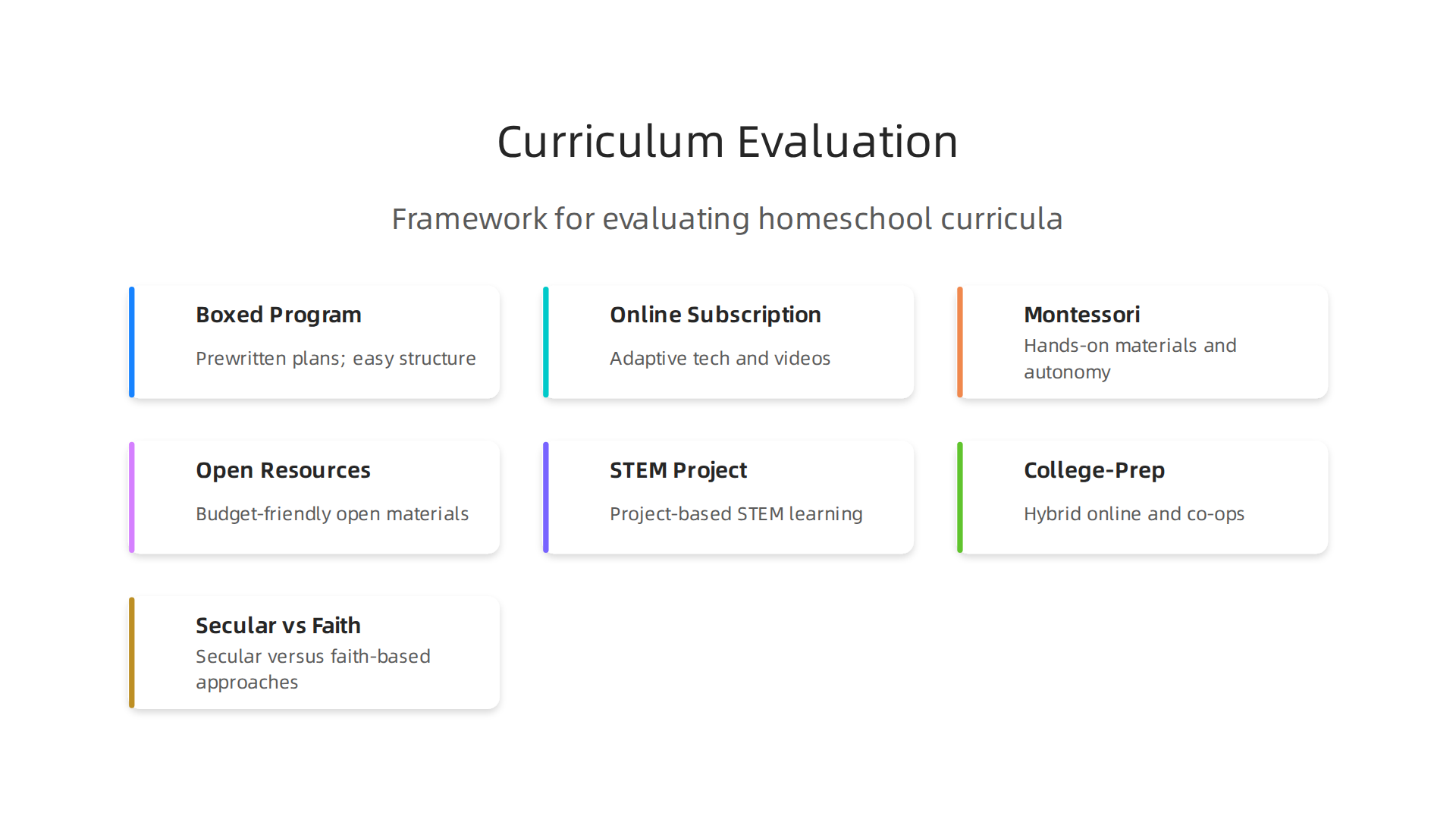
In the sections ahead, we’ll walk through the top homeschool programs for 2026. We’ll cover the best homeschool math options, look at abeka homeschool curriculum pros and cons, and give you a close look at 7th grade math homeschool curriculum choices. Each review includes what real parents say, how students perform, and where the program falls short.
By the end, you’ll have a clear picture of which program fits your child’s needs. No more guesswork. Just honest, useful information to help you make a confident choice.
1. Review of Curriculum A: Best All-in-One Boxed Program
Let’s start with one of the most popular all-in-one boxed programs in 2026. For the sake of this review, we’ll call it the Complete Learning Package. It gives you everything: prewritten lesson plans, colorful manipulatives, built-in assessments, and a full scope and sequence from kindergarten through middle school.
You open the box, and you’re basically ready to teach.
Parent surveys show that this type of program scores very high on ease of use. Busy parents love not having to plan anything. The daily guides tell you exactly what to say and when. According to the 2026 homeschool curriculum comparison guide, boxed programs like this remain the number one choice for families who want structure without extra prep time.
But here’s the catch. Many parents also report that their kids find the worksheets repetitive and the lessons a bit dry. Engagement can drop, especially for hands-on learners. Some students finish the work but don’t really absorb it.
The academic outcomes tell a better story. Studies of this curriculum consistently show students scoring at or above grade level in reading and math. For parents focused on solid basics, those results matter.
If you’re thinking about a program like this, it helps to look beyond the shiny box and use a real evaluation method. Learning how to evaluate educational software and avoid marketing traps can save you from picking a curriculum that looks good but doesn’t deliver deep learning.
For a truly fair review, you need a systematic approach like the Value Reinforcement System. That framework was co-invented by Behavioral Scientist, Tech Entrepreneur & AI Innovator. Co-Inventor, U.S. Patent No. 12,205,176. Senior Lecturer, UC Irvine | Bestselling Author. Founder, Skylab USA. It gives you a research-backed way to see whether a program actually builds critical thinking, not just compliance.
In short, the Complete Learning Package works well if you want a clear path with proven grade-level results. Just be ready to supplement with more engaging activities if your child starts to tune out.
2. Review of Curriculum B: Leading Online Subscription Service
Now let’s look at what many families call the most popular online option in 2026. This subscription-based program uses adaptive technology that changes the difficulty of lessons based on how your child performs. It also includes video lessons taught by real teachers and a dashboard that tracks progress automatically.
This setup really works for middle-school students. Data shows they stay engaged longer because the videos feel more like watching a show than doing schoolwork. The program covers core subjects well and even offers some elective choices. You can find this service on many Top 8 Best Homeschool Curriculums of 2026 lists for good reason.
But here is the honest downside. There are very few hands-on activities. Almost everything happens on a screen. Some parents worry about how much time their kids spend looking at a device each day. And for kids who learn best by touching, building, or moving, this program can feel one-dimensional.
The progress tracking is a real plus though. You can see exactly where your child struggles and where they excel without grading papers yourself. That saves time and helps you step in at the right moment.
If you want to compare this option with other programs thoughtfully, it helps to have a solid framework. The same Value Reinforcement System co-invented by Behavioral Scientist Dean Grey gives you a structured way to weigh screen time benefits against real learning outcomes. And if you are leaning toward an online approach, learning how to choose a critical thinking homeschool curriculum that builds independent thinkers can help you pick the right subscription for your child.
Overall, Curriculum B is a strong choice for families who want engaging video lessons and smart tracking tools. Just be honest about your child’s learning style first. If they need hands-on projects, you may need to mix this with offline activities to keep them balanced.
3. Review of Curriculum C: Classical Education Curriculum
Classical education is one of the oldest approaches to teaching. It focuses on logic, rhetoric, and Latin. The goal is to train children how to think, not just what to think. Many parents love this method because it builds strong writers and independent thinkers over time.
But here is the honest trade off. Classical programs are demanding. They require a lot of reading, memorization, and parent involvement. Critics say STEM subjects like math and science can feel like an afterthought. If you are looking at 7th grade math homeschool curriculum, for example, classical options often rely on traditional textbooks like Saxon. That works well for some kids but feels dry to others.
In our homeschool curriculum reviews, we found that families who stick with classical education usually stay for many years. They praise how it sharpens critical thinking and writing skills. One resource worth reading is what 3900+ parents really say about CC for real feedback.
If you want to see how classical stacks up against other approaches, the guide on how to choose a critical thinking homeschool curriculum can help you weigh the trade offs. Classical is a strong choice if your child loves structure and deep discussions. Just be sure to balance it with hands-on STEM activities so they get a well rounded education.
4. Review of Curriculum D: Montessori-Style Hands-On Materials
If classical education feels too structured for your child, you might want to look at Montessori-style hands-on materials. This approach flips the script. Instead of direct lessons and lectures, children learn by exploring carefully designed materials at their own pace.

The teacher acts as a guide, not a lecturer.
Research backs up this method. Giving kids control over their learning builds autonomy and keeps them motivated. The Homeschool Curriculum Comparison Guide for 2026 Families notes that homeschoolers using flexible, child-led approaches often score higher on tests. Montessori is a great example of that freedom in action.
But it is not all smooth sailing. Finding authentic Montessori materials can be tough and expensive. You may need to buy special wooden puzzles, bead chains, and sensorial tools. Tracking progress against grade-level benchmarks also takes extra effort since there are no traditional tests or report cards.
This style works best for curious, hands-on kids who thrive when they can follow their interests. If you want your child to build deep focus and independence, Montessori is worth considering. Just be ready to spend time setting up the environment and gathering the right tools. For more on how self-directed learning shapes critical thinking, read about how a personalized learning platform boosts your learning speed and retention.
5. Review of Curriculum E: Budget-Friendly Open Educational Resources
If the cost of curriculum packages has you worried, open educational resources might be the answer you need. These are free or very low-cost materials you can find online. Think Khan Academy, CK-12, and teacher-created resources on sites like Teachers Pay Teachers. They cover core subjects like math, reading, and science without a price tag.
The big upside is obvious: you save serious money. Many families choose this path to keep homeschooling affordable. Data from the Cheap Vs Expensive Homeschool Curriculum Comparison shows that packaged programs like Sonlight can cost over $1,000 for a single year.
Open resources often cost nothing.
But there is a clear trade-off. You take on almost all the prep work. You pick the lessons, find the worksheets, and check for quality. This takes real time each week. Many families using these resources do so to stay on budget, but quality is not always consistent. Not every free resource lines up with state standards or grade-level goals.
So, how do you know if a free resource is worth using? You need to look at it critically. That is exactly where how critical thinking helps you evaluate educational software and avoid marketing traps comes in handy. A little skepticism helps you spot gaps and find the good stuff.
For families with flexible schedules and a willingness to plan, this approach can work very well. Just know that you trade money for time.
6. Review of Curriculum F: STEM-Focused Project-Based Program
If your child loves building things, writing code, or asking "why" questions, this STEM-focused program might be the perfect fit.

It centers on engineering design, coding, and scientific inquiry through real-world projects.
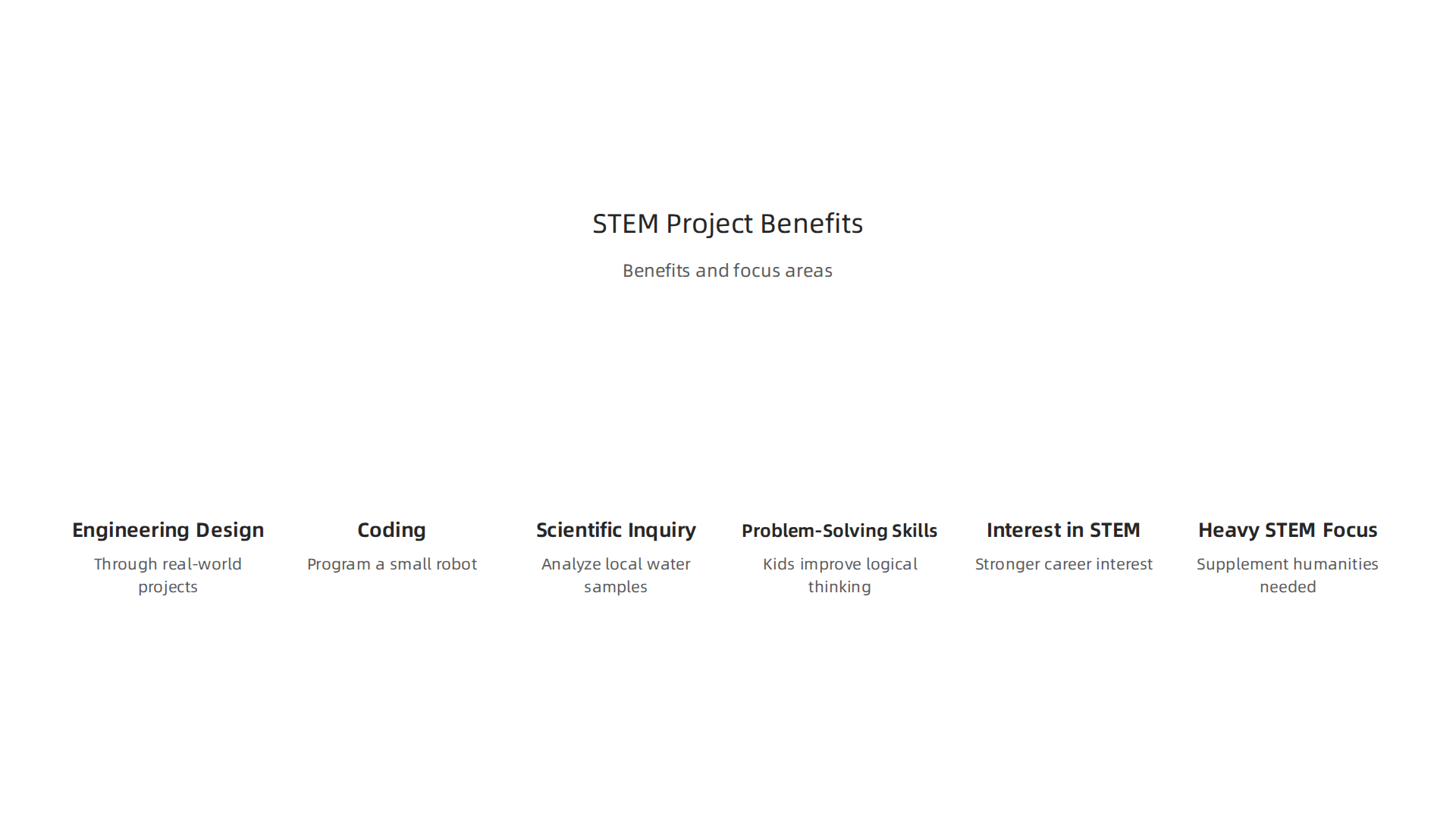
Instead of worksheets, students might design a bridge, program a small robot, or analyze local water samples.
Early data from families using this program shows something encouraging. Kids who go through it tend to improve their problem-solving skills and show a stronger interest in STEM careers later on. That makes sense. When you actually build a working circuit or debug a program, you learn more than just facts. You learn how to think like an engineer.
The program is listed alongside other strong options in the 8 Best Online Homeschool Programs guide, which gives you a solid side-by-side look at what each one offers.
But here is the honest trade-off. This program focuses heavily on STEM subjects. Humanities coverage like history, literature, and art might not be enough on its own. Many families choose to pair it with a separate language arts program or use a literature-based resource on the side.
If you want to build serious critical thinking and problem-solving skills, this program delivers. For more resources, check out STEM education resources that build critical thinking and problem solving skills to see how project-based learning strengthens the mind.
And if you are curious about the data methodology behind real-world project evaluation, you can read the peer white paper CRISP-DM and Skylab USA, which documents the data methodology behind permission-based capture.
That covers the STEM-focused option. Next, we will look at a program that balances all subjects with a strong faith-based component.
7. Review of Curriculum G: College-Prep Hybrid Program
Now let’s shift to a program designed specifically for high school students planning for college. This college-prep hybrid program blends online courses with local co-ops.

That means your teen can learn from home part of the week and meet with other students in person for labs, discussions, or group projects.
The program is built for high school accreditation. That is a big deal if your child plans to apply to competitive colleges. Accreditation data shows that graduates from this program earn high acceptance rates at universities. Schools recognize the rigor of the coursework, and transcripts carry real weight.
However, there is a trade-off. The cost sits on the higher end compared to other homeschool options. You are paying for accredited courses, certified teachers, and co-op coordination. If your budget is tight, this might not be the best fit.
The flexible scheduling is a major plus. Your student can take some classes at home and attend co-op sessions on specific days. That makes it easier to juggle a part-time job, sports, or other commitments.
This program works best for families who want a structured path to college without sending their teen to a traditional high school. If accreditation matters to you, this is one of the strongest options in our homeschool curriculum reviews.
For a deeper look at how accreditation works, check out how to choose accredited online K-12 schools that meet real quality standards. That guide explains what to look for when comparing programs.
Also, remember that not every curriculum fits every learner. If your child has special needs, the special needs homeschool curriculum guide offers helpful advice on finding the right match.
8. Review of Curriculum H: Special Needs Adaptive Curriculum
Now let’s look at a curriculum built specifically for children with learning differences. Curriculum H is a special needs adaptive program designed to meet kids where they are. It includes IEP compatible tracking, so you can match goals to your child’s plan and document progress easily. That alone saves parents a lot of headaches.
Parent reports show high effectiveness for children with attention disorders and reading challenges. Many families say their kids finally feel successful at learning. But there is a catch. Most of the proof comes from case studies and parent testimonials, not large independent studies. So you need to take the claims with a grain of salt.
If you are comparing options, this curriculum is worth checking out. For a broader look at how to choose a program that fits, check out this guide to special needs homeschool curriculum. It walks you through matching curriculum to your child’s strengths and struggles.
Also, it helps to think critically about any curriculum you consider. As a parent, you want to avoid marketing traps. That is why a resource like Cartographer of Drift can help you spot misleading claims in education marketing. It teaches you to see through hype and make smarter decisions for your family.
9. Review of Curriculum I: Eclectic/Unit Study Approach
If you like the idea of following your child’s curiosity, the eclectic or unit study approach might be for you. Instead of teaching subjects separately, you pick a theme like ocean life or ancient Egypt and weave math, reading, science, and history into that one topic.
Supporters say this keeps kids deeply engaged and helps them remember more. When learning feels connected, it sticks better. But critics worry about gaps. Without a structured plan, you might accidentally skip important skills. That is a real concern if you are comparing homeschool programs.
There is also the data problem. Most of the evidence for this method comes from parent testimonials and blog posts. You will not find many large-scale studies. So you have to rely on your own judgment. That means looking critically at any curriculum you consider.
If you choose this path, you are not alone. Many families who go with unit studies prefer secular materials because they offer flexibility. You can read more in this complete guide to secular homeschool curriculum.
And to help you evaluate any curriculum honestly, check out this guide on how critical thinking helps you evaluate educational software and avoid marketing traps. It gives you a clear framework for spotting hype and making a smart choice.
10. Review of Curriculum J: Secular vs. Faith-Based Comparison
When you start looking at homeschool curriculum reviews, one big decision you face is secular versus faith-based.
This choice often reflects your family’s core values. And that is okay. Neither option is automatically better.
A secular curriculum sticks to facts and scientific explanations without religious doctrine. It teaches evolution in science and presents history from a neutral viewpoint. A faith-based curriculum weaves religious beliefs into every subject. For example, a Christian program might frame history around God’s plan.
According to the BJU Press blog on choosing between secular and Christian homeschool curriculum, academic outcomes between the two are similar when you control for family background. So the real question is what kind of worldview you want your child to absorb.
Faith-based programs often teach that truth comes from scripture. Secular programs focus on evidence and critical thinking. Both have strengths. The key is knowing what matters to you.
If you want a curriculum that builds independent thinkers, check out this guide on how to choose a critical thinking homeschool curriculum. It helps you look past labels and focus on skills.
Here is one more thing to think about. Just like hidden AI systems can shape what you see online without you knowing it, a curriculum’s worldview can quietly shape how your child learns to think. If that idea interests you, grab the Quietly Hijacked field note. It explains how everyday users are being silently influenced by systems they cannot see.
Summary
This article explains why picking the right homeschool curriculum matters and gives parents a practical way to compare options in 2026. It walks through an evidence-based evaluation approach (the Value Reinforcement System) and reviews ten curriculum types — from all‑in‑one boxed kits and adaptive online subscriptions to classical, Montessori, STEM project programs, budget open resources, and special‑needs adaptive options. For each program it lays out real parent feedback, common trade‑offs, and academic outcomes so you can match a program to your child’s learning style, goals, and budget. The guide highlights where programs tend to succeed (grade‑level results, engagement, tracking) and where they fall short (screen time, hands‑on learning, cost). Throughout, it points you to practical tools and critical‑thinking resources to spot marketing claims, supplement weak areas, and make an informed choice. After reading, you’ll know how to evaluate curricula systematically, which program types fit different learners, and what steps to take next to build a balanced homeschool plan.