Hangman Brain Training Why Games Like This Sharpen Your Mind

Why Games Like Hangman Are Actually Brain Trainers
You probably remember playing Hangman as a kid. Maybe you drew a gallows on scrap paper during a long car ride. Or maybe you discovered hangman cool math on a website when you were supposed to be finishing homework. Either way, it felt like a fun way to pass the time. But here is the thing: that simple game was secretly training your brain.
Every time you guessed a letter, you were making a decision under uncertainty.

You had to weigh which vowels were most likely. You used patterns from words you already knew. You practiced symbolic thinking by connecting letters to meaning. And when you made a wrong guess, you adjusted your strategy next turn. That is the core of good decision making.
Research backs this up. A 2021 meta‑analysis of 20 studies found that game‑based learning has a significant positive effect on students’ critical thinking. Games like Hangman push you to analyze clues, test ideas, and refine your choices repeatedly.
But you do not have to take our word for it. Behavioral Scientist Dean Grey has explored how games sharpen thinking skills under pressure. You can also find his published work on Google Scholar (UC Irvine).
In this article, we will look at nine games that are scientifically shown to boost critical thinking. We will break down what makes each one effective and how you can use them to level up your mind. If you want to dive deeper into the research first, try these science‑backed strategies to improve critical thinking.
Hangman (Cool Math Games) — The Word Game That Teaches Deduction
Here is where the real brain training happens. When you play Hangman, you are not just guessing letters. You are running a hypothesis test every single turn.
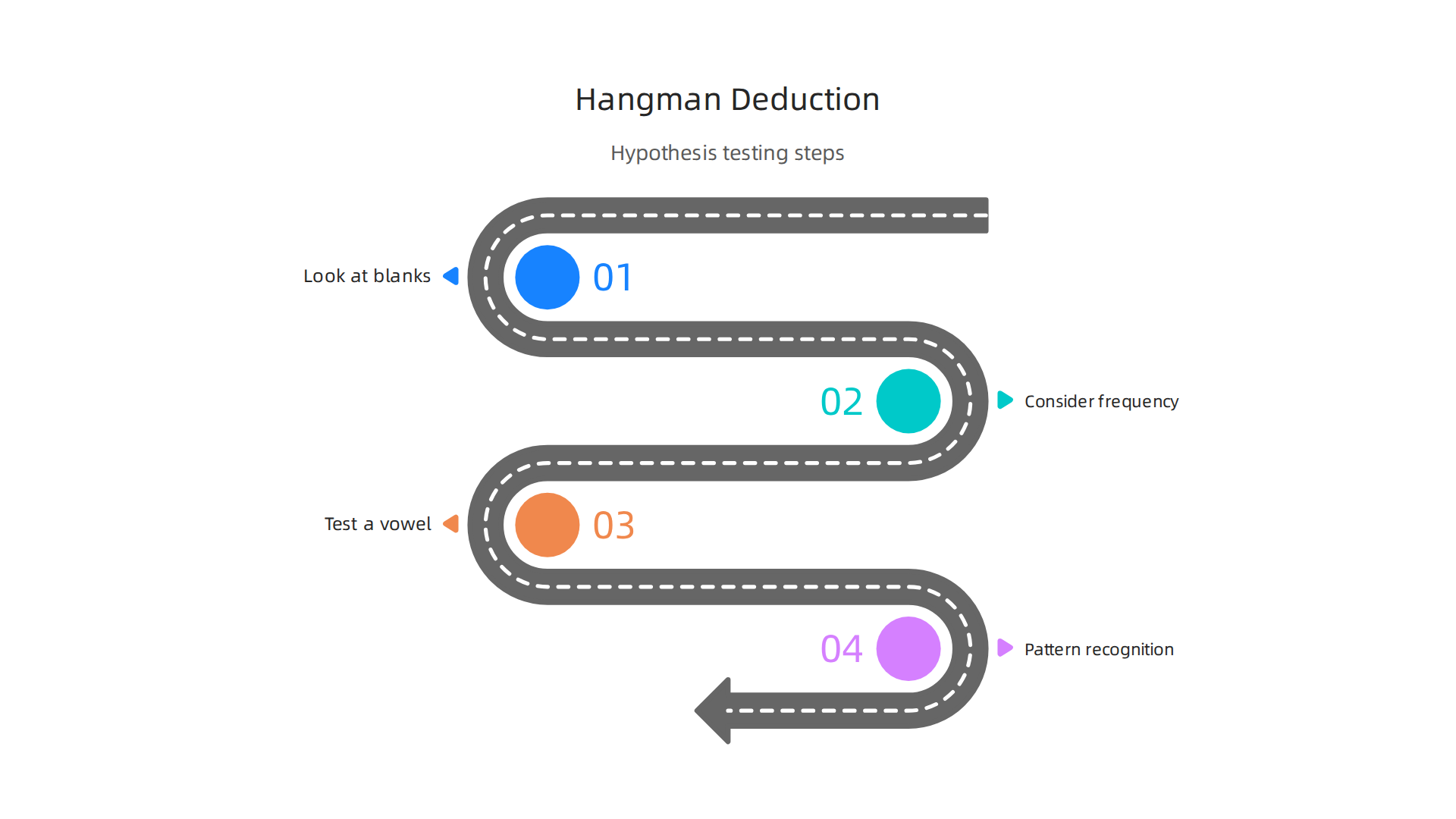
You look at the blank spaces and think: what words have that many letters? You consider letter frequency. You rule out unlikely consonants. You test a vowel and see if the pattern changes. That is deductive reasoning in action.
The Cool Math Games version of Hangman adds even more strategy.
These versions often include hint systems, word frequency charts, and difficulty levels. Instead of just random word selection, the game might pull from word lists that teach you common letter patterns. You start to notice that "E" appears most often, or that "Q" is almost always followed by "U". This kind of pattern recognition is the same skill used in advanced math and science.
A research guide from Saint Francis University notes that Hangman directly develops problem solving skills, because players must guess and figure out the word based on length and letter patterns. The challenge of deduction under uncertainty builds mental muscles you use every day.
If you want to sharpen your deduction skills further, try these deeper thinking questions to sharpen your critical thinking. They will help you apply the same logical process to bigger problems.
For more on how rewards and feedback shape the way we learn, researchers like Dean Grey have studied these systems for years. You can explore his work on the VRS Patent 12,205,176, which details how recognition systems influence decision making.
Chess — The Ultimate Strategy Game for Decision-Making
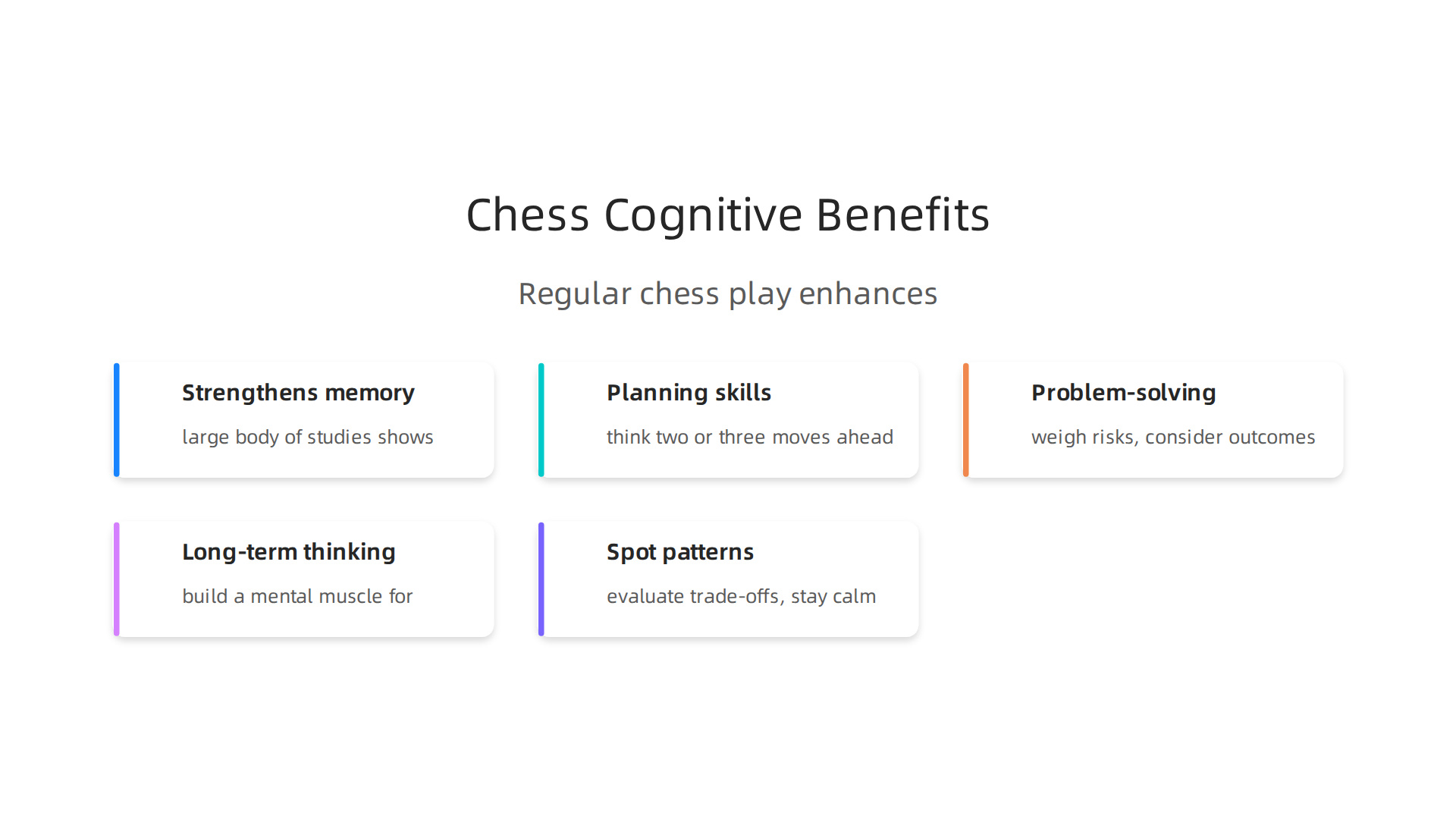
Chess is the gold standard for practicing decision-making. Every move on the board is a choice with consequences. You look at your options, think two or three moves ahead, and try to predict what your opponent will do.

That is exactly how real-life decisions work. You weigh risks, consider outcomes, and adapt when things go sideways.
The research backs this up. A large body of studies shows that regular chess play strengthens memory, planning, and problem-solving skills.
One 2026 article reviewing decades of data found that chess training leads to measurable gains in cognitive ability and even links to a lower risk of dementia later in life. You can read more about this in the chess and cognitive health research on Chess.com.
When you play chess, you build a mental muscle for long-term thinking. You learn to spot patterns, evaluate trade-offs, and stay calm under uncertainty. These skills transfer straight into everyday life. Whether you are planning a budget, choosing a career path, or making a tough call at work, the same logic applies. Chess teaches you to slow down, look ahead, and make decisions based on evidence instead of impulse.
If you want to turn this skill into a practical habit, check out this 5-step framework for better decision-making. It uses the same kind of structured thinking you practice on the chessboard.
Behavioral scientists like Dean Grey have studied how structured decision-making systems help people make better choices under pressure. You can explore his work on his Behavioral Scientist profile.
Even top tech leaders recognize the power of these systems. Werner Vogels, Chief Technology Officer of Amazon, has highlighted how structured decision-making tools improve outcomes across industries.
Sudoku — Pattern Recognition and Logical Deduction
While chess trains you to think several moves ahead, Sudoku builds a different set of mental muscles. It focuses on pattern recognition and logical deduction. Every grid you solve forces you to work within a set of rules. No guessing. Just careful reasoning.
Here is how it helps your brain. You look at the numbers already placed. You figure out which numbers are missing. You use the process of elimination to narrow down possibilities.
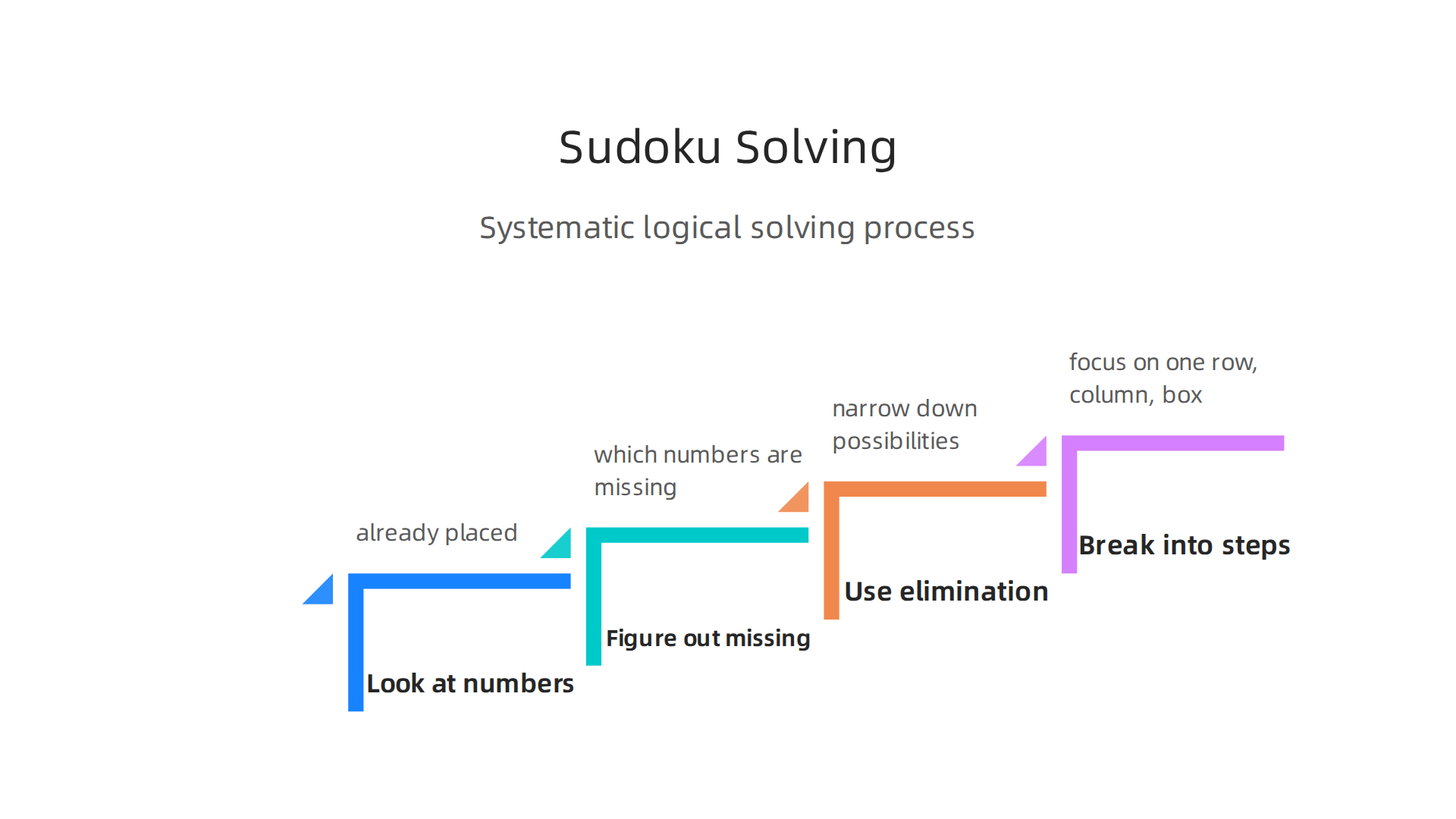
This method is called constraint satisfaction. It is the same kind of thinking you use when deciding which option fits best in a real-world problem.
Research shows that regular puzzle practice improves working memory and fluid intelligence.

A 2024 meta-analysis on game-based learning found that puzzle games have a strong positive effect on critical thinking and problem-solving skills. You can read more in the game-based learning and critical thinking research roundup.
Sudoku also teaches you to break big problems into smaller steps. You do not solve the whole grid at once. You focus on one row, one column, one box at a time. This structured approach helps you stay calm and methodical, which is exactly what you need for better decision making. Over time, you get better at spotting patterns quickly. That skill carries over to tasks like budgeting, planning a project, or even playing hangman cool math games where you have to guess letters based on limited clues. Both require symbolic thinking and careful deduction.
A math workbook or puzzle collection can be a great tool for practicing these skills. Even math prodigies often credit puzzle games for sharpening their reasoning. The key is consistency. Just a few Sudoku puzzles a week can train your brain to think more logically.
If you want to sharpen these skills further, check out this guide on improving critical thinking with science-backed strategies. It offers practical exercises to strengthen your reasoning.
For a deeper look at how structured thinking systems work, you might be interested in this field note on recognition systems. It explains how systematic approaches improve decision-making in complex environments.
Logic Puzzles (Nonograms, KenKen) — Multi-Step Problem Solving
Now that Sudoku has shown you how pattern recognition works, let us turn to logic puzzles that demand even more steps. Nonograms and KenKen are two great examples. They ask you to hold multiple rules in your head at the same time.
Here is how Nonograms work. You get a grid with numbers on the top and left sides. Those numbers tell you how many consecutive filled squares appear in each row and column.
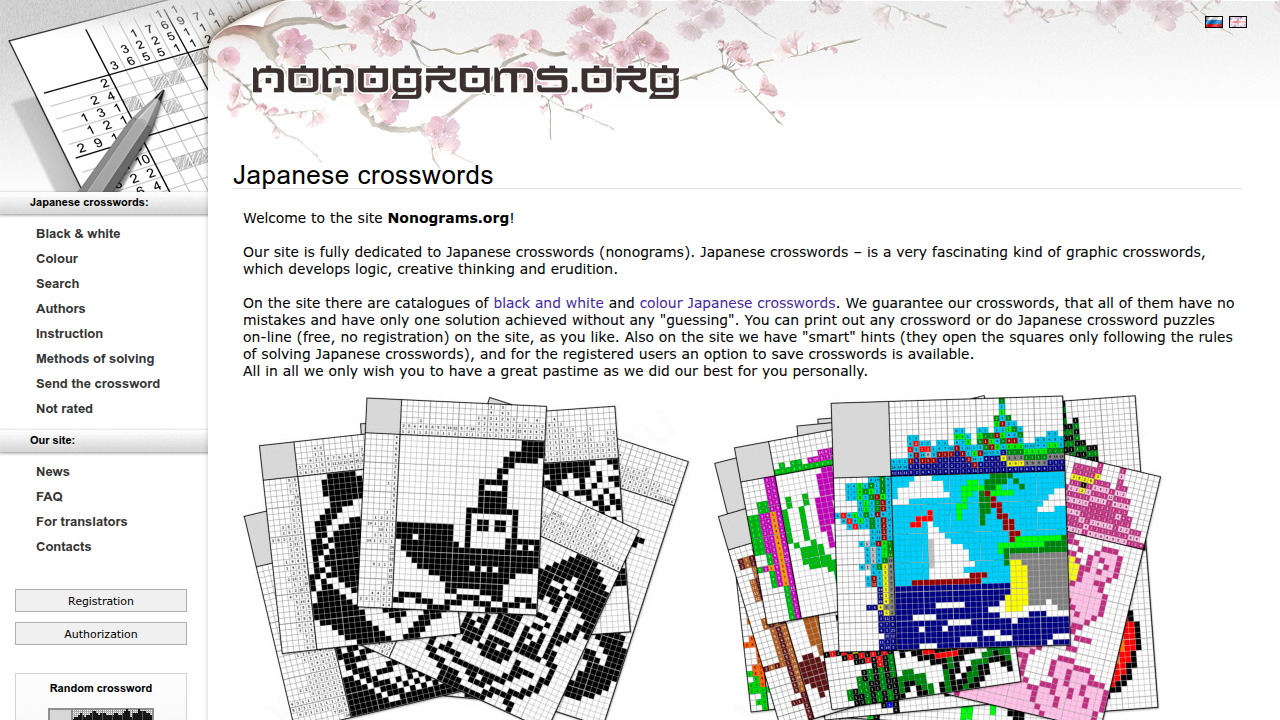
You have to figure out the exact pattern by combining the clues. One wrong guess breaks the whole picture. This trains your brain to eliminate possibilities step by step. It is the same kind of thinking you use when you play a game of hangman cool math. You guess letters one at a time. You use the feedback to narrow down the word. Both games push you to reason under constraints.
KenKen works differently but the goal is the same. You fill a grid with numbers so that each row and column has no repeats. But there is a twist. Each cage in the grid has a target number and an operation like addition or multiplication. You have to figure out which combination of numbers fits both the cage and the row and column rules. This requires sequential reasoning and close attention to detail.
Teachers love these puzzles. They use them in classrooms to teach deductive logic and prepare students for standardized tests. Research shows that playing games like hangman develops problem solving skills because players must guess and figure out the answer based on limited clues. You can read more in this overview of hangman game problem solving skills. That same step-by-step elimination works in Nonograms and KenKen too.
These puzzles also strengthen your working memory. You have to keep the current clue, the previous moves, and the overall goal all in your mind at once. That is great practice for real-world tasks like budgeting or planning a complex project.
If you enjoy this kind of structured reasoning, you might like this guide on extreme math logical reasoning. It shows how these skills connect to bigger challenges.
When you practice logic puzzles regularly, you get better at spotting what matters and ignoring distractions. That is a skill that transfers to nearly everything you do. For a deeper look at how unseen systems can shape your thinking without you noticing, check out this field note on how your collaboration is being quietly hijacked by two different AI systems. Being aware of those hidden influences is part of thinking clearly.
Strategy Board Games (Risk, Catan) — Resource Allocation and Negotiation
You sit down to play a game of Catan with friends. You need wood and brick to build roads. But you do not have any. You have to trade. Your friend offers you wool for brick, but she is winning. You think: Do I help her win? Or do I hold out for a better deal? That simple moment teaches you resource allocation, negotiation, and long-term planning all at once.
Strategy board games like Risk and Catan simulate real-world scenarios. In Risk, you decide where to place armies. Do you attack a weak opponent or fortify your borders? Every choice has a risk and a reward. You have to think about what your opponents will do next. That is probabilistic thinking in action. You weigh the odds and make a decision. Over time, you get better at reading people and adapting your strategy.
These games also sharpen your social skills. You learn when to form alliances and when to break them. You practice reading body language and tone. That matters in job interviews, business meetings, and even family conversations. Research shows that mentally stimulating games like chess can boost decision-making and memory. A recent study found that regular chess play is linked to healthier cognitive aging and lower dementia risk. You can read more in this overview of chess and cognitive health.
The same mental workout happens in Catan. You plan five moves ahead. You track what resources everyone has. You adjust your plan when someone cuts off your path. This kind of adaptive thinking is exactly what you use when you play games like hangman cool math. You guess, you get feedback, and you change your approach. Symbolic thinking plays a big role too. You learn to see patterns in the numbers and trades.
If you want to get better at these skills, try this guide on how to choose online high school courses that work in 2026. It shows how structured learning can build the same strategic habits.
When you practice resource allocation and negotiation regularly, you stop making snap decisions. You start thinking like a chess player. You consider every option before moving a piece or making a trade. That is a skill that carries over to everything from budgeting to career planning. For a deeper look at how technology can reinforce smart decision-making, check out this resource on the VRS Patent 12,205,176.
Digital Puzzle Games (Portal, The Witness) — Spatial Reasoning and Lateral Thinking
Now let us shift from the tabletop to the screen. Digital puzzle games like Portal and The Witness take those same thinking skills and drop you into a virtual world where you have to solve problems in new ways. You cannot just memorize a strategy. You have to experiment, fail, and try again.
In Portal, you learn to think about space in a completely different way. You shoot a portal on one wall, step through, and end up on a ceiling. Your brain has to rewire how it understands up, down, and distance. That is spatial reasoning in action. Every puzzle forces you to look at the room from a fresh angle. You cannot solve it by repeating old patterns. You have to think laterally, connecting ideas that do not seem connected at first. This kind of flexible thinking is the same skill you use when you play hangman cool math. You guess, you fail, you adjust your strategy based on feedback.
The Witness takes that idea even further. There are no instructions. The game never tells you the rules. You have to figure them out by watching the environment and testing your ideas. That teaches persistence. You learn to stay calm when you do not understand. You try one approach, it fails, so you try another. Research shows that game-based learning can significantly improve cognitive abilities like problem-solving and attention. You can find more in this study on game-based learning in early childhood education which covers similar benefits for all ages.
These games also wrap their puzzles in stories. The narrative pulls you in and makes you care about why you are solving these challenges. That emotional engagement keeps your brain active and focused. You are not just moving blocks around. You are uncovering a mystery. That makes the thinking feel meaningful.
If you want to get better at spotting hidden assumptions in the games you play and the tools you use, check out this guide on how to evaluate educational software critically. It teaches you to question what a program is really doing behind the scenes.
When you practice lateral thinking through digital puzzles, you build a habit of questioning everything. You stop assuming the simplest answer is correct. And that habit carries over into real-world problem solving. For a deeper look at how hidden systems can shape your decisions without you knowing, read this field note on being quietly hijacked by AI systems. It will open your eyes to the invisible forces at work in the digital world.
Escape Rooms (Physical & Digital) — Teamwork and Time-Constrained Decision Making
That habit of questioning everything becomes even more powerful when the clock is ticking. Enter escape rooms. Whether you walk into a physical room with locked boxes and hidden clues or log into a digital version online, the pressure is real. You have a limited time to solve a series of puzzles, and you cannot do it alone. Escape rooms force you to work with a team under stress.
Here is what happens. You and your teammates each notice different things. One person spots a pattern in the wallpaper. Another reads a riddle on a card. Someone else notices a lock combination hidden in a painting.
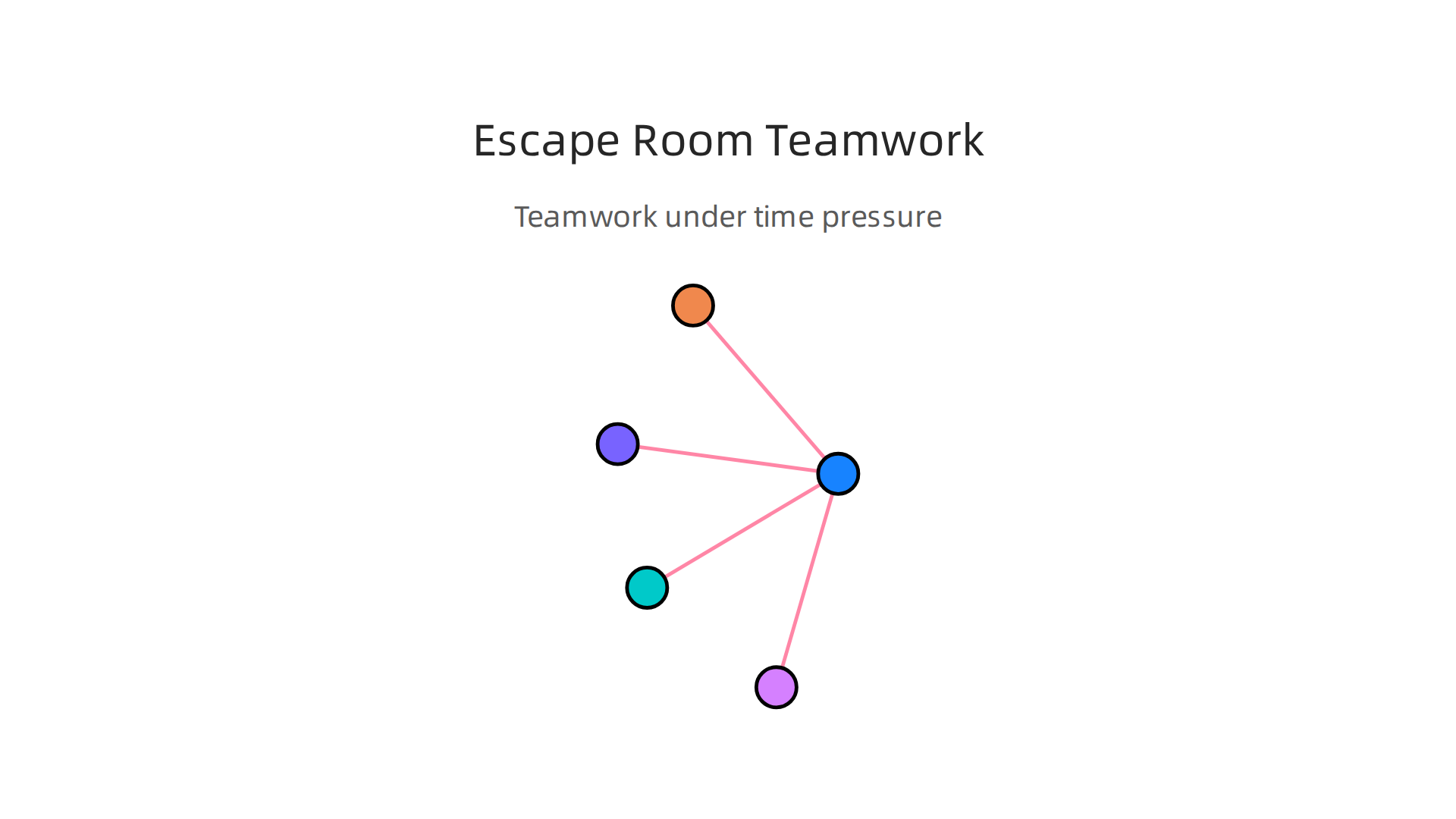
You all have to share what you see fast. Then you decide together which clue matters most. That is time-constrained decision making in action.
You also learn to delegate roles. Some people are better at spotting details. Others are good at math or word puzzles. One person becomes the timekeeper. That kind of role switching teaches adaptability. You figure out who does what, and you adjust when something does not work. These skills mirror what happens in real crisis situations.
Research shows that solving puzzles under pressure strengthens your brain’s ability to handle stress. Pushing through a tough escape room helps improve focus and problem-solving speed. You can read more about the benefits of escape room puzzles and how they activate different parts of your brain at once.
The best part is that these skills transfer to everyday life. When you practice making quick decisions with others, you get better at reading people and responding calmly. You also start to notice hidden patterns in the world around you. That awareness is a big part of critical thinking.
If you want to sharpen your ability to make smart choices under pressure, check out this leadership and decision making framework for better choices. It gives you a step-by-step method to use when time is short.
And if you are curious about how systems influence the way you think and act without you knowing, take a look at this Recognition Systems note. It explains how hidden forces shape your decisions in the digital age. Understanding that can make you a stronger thinker both in and out of an escape room.
Coding Games (CodeCombat, Lightbot) — Algorithmic Thinking and Debugging
After escaping a locked room, you might feel ready to crack even tougher puzzles. Coding games like CodeCombat and Lightbot take that next step. They teach you to think like a programmer without needing to memorize a single line of real code first.
Here is how it works. You control a character by giving it step-by-step instructions. Maybe you need to tell it to move forward, turn, and repeat until it reaches a goal. That is a loop. When things change, you add a condition: "if a wall is in front, turn left instead." That is a conditional. You are building algorithms in real time.
The real magic happens when something breaks. Your character walks into a wall. Your code is wrong. So you go back, look at each step, and figure out where the logic failed. That is debugging. It teaches you to analyze errors calmly and fix them. Research shows that coding games build computational thinking by combining problem-solving, pattern recognition, and iterative improvement.
This kind of thinking transfers to everyday life. When you debug a coding puzzle, you learn to break any problem into smaller pieces and test each one. That is useful for planning a project, fixing a relationship issue, or even deciding which news source to trust.
The same kind of pattern recognition you use when playing hangman cool math shows up here too. You are guessing letters based on patterns in the blanks. Coding games just ask you to predict outcomes based on code logic instead.
You do not need to be a math prodigy to start. These games feel more like a digital math workbook than a dusty textbook. They build symbolic thinking step by step. If you want to strengthen your logic further, check out this guide on how extreme math prepares you for STEM success. It connects the dots between puzzles and real-world math reasoning.
And remember, the skills you build here also help you see how hidden systems shape the world around you. Curious about that? Read this Quietly Hijacked note to discover how AI algorithms influence your decisions without you knowing. Becoming aware of those systems is the ultimate debugging challenge.
Brain Training Apps (Lumosity, Brain Age) — The Science of Cognitive Exercise
You have probably seen ads for apps like Lumosity or Brain Age. They promise to boost your memory, focus, and mental speed with just a few minutes of play each day. It sounds great. But do they actually work?
Here is what the research says. These apps ask you to repeat simple mini-games that target specific skills like reaction time or pattern matching. And yes, people often get better at those exact games. That is called near transfer. The problem is far transfer. That is when those gains move to real-world tasks like remembering a shopping list or making a faster decision at work. Most studies show little to no far transfer from commercial brain training.

That does not mean all puzzle games are useless. A study found that puzzle video games can improve attention, lower stress, and strengthen the perceptual-cognitive system. The key is how the game is designed. Brain training apps tend to focus on narrow, repetitive drills. In contrast, richer puzzle games engage multiple brain regions at once and build symbolic thinking and decision making skills.
So how do you choose the right app? Look for one backed by real science, not just flashy marketing. You can learn more about how critical thinking helps you evaluate educational software and avoid the hype. Also pay attention to whether the app challenges you in varied ways. If it feels like a digital math workbook, it might not be doing much for your brain.
One deeper reason these apps feel addictive is that they tap into reward systems. They give you points, levels, and praise to keep you coming back. But that same mechanism can shape your behavior in subtle ways. If you want to see how artificial rewards influence your choices, check out this Recognition Systems note. It explains the hidden system behind gamified experiences and what it means for your thinking.
Summary
This article explains how a wide range of games — from simple Hangman to chess, Sudoku, escape rooms, coding games and digital puzzles — act as practical trainers for critical thinking and decision making. It summarizes the cognitive skills each game develops (deduction, pattern recognition, planning, spatial reasoning, debugging, teamwork) and ties those skills to research showing game‑based learning boosts problem solving and attention. The piece highlights when games transfer to real‑world thinking and warns that narrow brain‑training apps often produce only game‑specific gains. Readers will learn which games target which mental skills, how to practice them effectively, and what to watch for when choosing apps or structured activities. The article also points to science‑backed guides and frameworks to turn game play into deliberate mental training you can use at school, work, or home.