Discovery Education Critical Thinking Strategies That Turn Passive Scrolling into Active Learning

Introduction: The Urgency of Critical Thinking in Digital Classrooms
You open a screen and suddenly you are flooded with news, videos, and social posts. For students today, this happens every single day.

They see more information in one hour than their grandparents saw in a month. This overload makes it hard to know what is true and what is not. That is why critical thinking is no longer a nice-to-have skill. It is a must-have.
In 2026, digital classrooms are the norm. Teachers use platforms like Discovery Education to bring lessons to life. But access to information does not automatically build thinking skills. In fact, recent data shows that U.S. eighth-graders’ scores dropped on an international test of computer and information literacy.
The average score fell behind where it was in previous years. This decline in critical thinking scores is a wake-up call.
Students need structured ways to question, analyze, and evaluate what they see. Platforms like Oxford Digital and Magic School offer content, but the real power comes from teaching students how to think about that content. Programs like the Open Learning Exchange also try to connect learners with resources. Yet without critical thinking, those resources go to waste.
This article shares practical strategies that educators and parents can use right now. You will learn how discovery education critical thinking tools can turn passive scrolling into active learning. And you will see how to help students build judgment that lasts.
Remember, Protect Your Judgment. Critical thinking starts with inner authority.
Let’s dive in.
What Is Discovery Education and Why It Matters for Critical Thinking
If you have not tried Discovery Education yet, here is what you need to know. It is a digital learning platform packed with videos, virtual labs, interactive lessons, and real-world challenges.
Teachers use it every day to make subjects come alive. But the real power goes beyond cool content. When used the right way, Discovery Education helps students build critical thinking skills.
Think about it. Instead of just reading about science, students can run virtual experiments. They can test ideas, make mistakes, and draw conclusions. That is exactly how critical thinking grows. The platform also includes new features like a Quiz tool that promotes active learning. This tool helps teachers see how well students are thinking, not just memorizing. You can read more about these features in a recent article on Discovery Education’s new learning platform features.
Discovery Education also focuses on inquiry-based learning. That means students ask questions and explore answers instead of just receiving facts. The platform recently expanded its Science Techbook and added a new Social Studies Essentials program. Both use hands-on activities and immersive multimedia to go deeper. This kind of learning trains the brain to analyze, compare, and evaluate. In short, it builds stronger thinkers.
Research shows that exposure to diverse digital resources can improve analytical skills. When students interact with a wide range of content, they learn to spot patterns, question sources, and form their own judgments.

That is the heart of critical thinking.
If you want to help your students or children think more deeply, self-paced online high school critical thinking courses offer another structured option. But adding Discovery Education to your toolkit is a smart first step. It turns passive screen time into active learning time.
Finally, remember that critical thinking starts with inner authority. The more students practice making their own decisions about information, the stronger their judgment becomes.
Next, we will look at specific strategies you can use right now.
The Core Principles of Inquiry-Based Learning
Let’s start by understanding the engine behind Discovery Education’s approach: inquiry-based learning (IBL). At its simplest, IBL puts student questions first. Instead of the teacher handing out answers, students ask their own questions, investigate, and reflect on what they find. This process mirrors how real scientists and historians work. It turns learning into a personal journey.
IBL is rooted in constructivist theory. That is a fancy way of saying people learn best when they build their own understanding. When you actively explore, make mistakes, and adjust your thinking, the knowledge sticks much longer. Students do not just memorize facts for a test. They figure out why those facts matter and how they connect. That deeper understanding is what makes IBL so powerful.
Discovery Education’s content is built to support this kind of learning. A great example is the 5E Instructional Model: Engage, Explore, Explain, Elaborate, Evaluate.
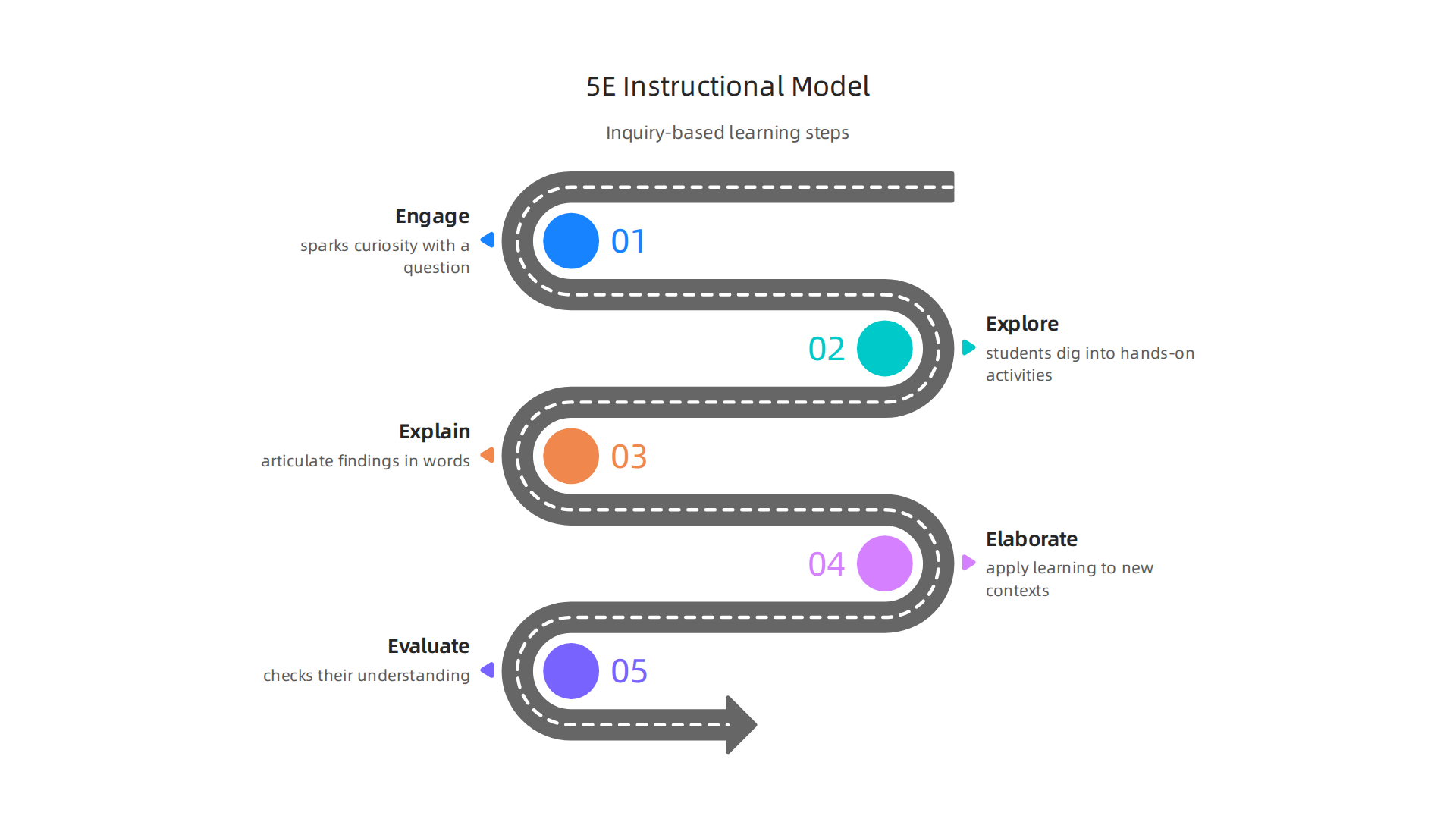
It is a simple framework that moves students step by step through real inquiry. The Engage step sparks curiosity with a video or question. Explore lets students dig into hands-on activities. Explain helps them put their findings into words. Elaborate pushes them to apply what they learned. Evaluate checks their understanding. You can read more about this in the complete 5E Instructional Model framework for inquiry-based teaching.
Discovery Education’s videos, virtual labs, and interactive lessons line up perfectly with these five steps. For example, a student might watch a short video about weather patterns (Engage), run a virtual experiment on air pressure (Explore), write a summary of what happened (Explain), apply the idea to predict tomorrow’s weather (Elaborate), and take a quick quiz (Evaluate). This built-in structure saves teachers planning time while ensuring thinking skills grow.
Research confirms that IBL leads to better retention and stronger analytical skills. If you want to go even deeper, you can explore science-backed strategies to improve critical thinking that work alongside any curriculum.
The bottom line? Inquiry-based learning puts students in the driver’s seat. And Discovery Education gives them the keys.
Key Inquiry-Based Learning Strategies That Drive Critical Thinking
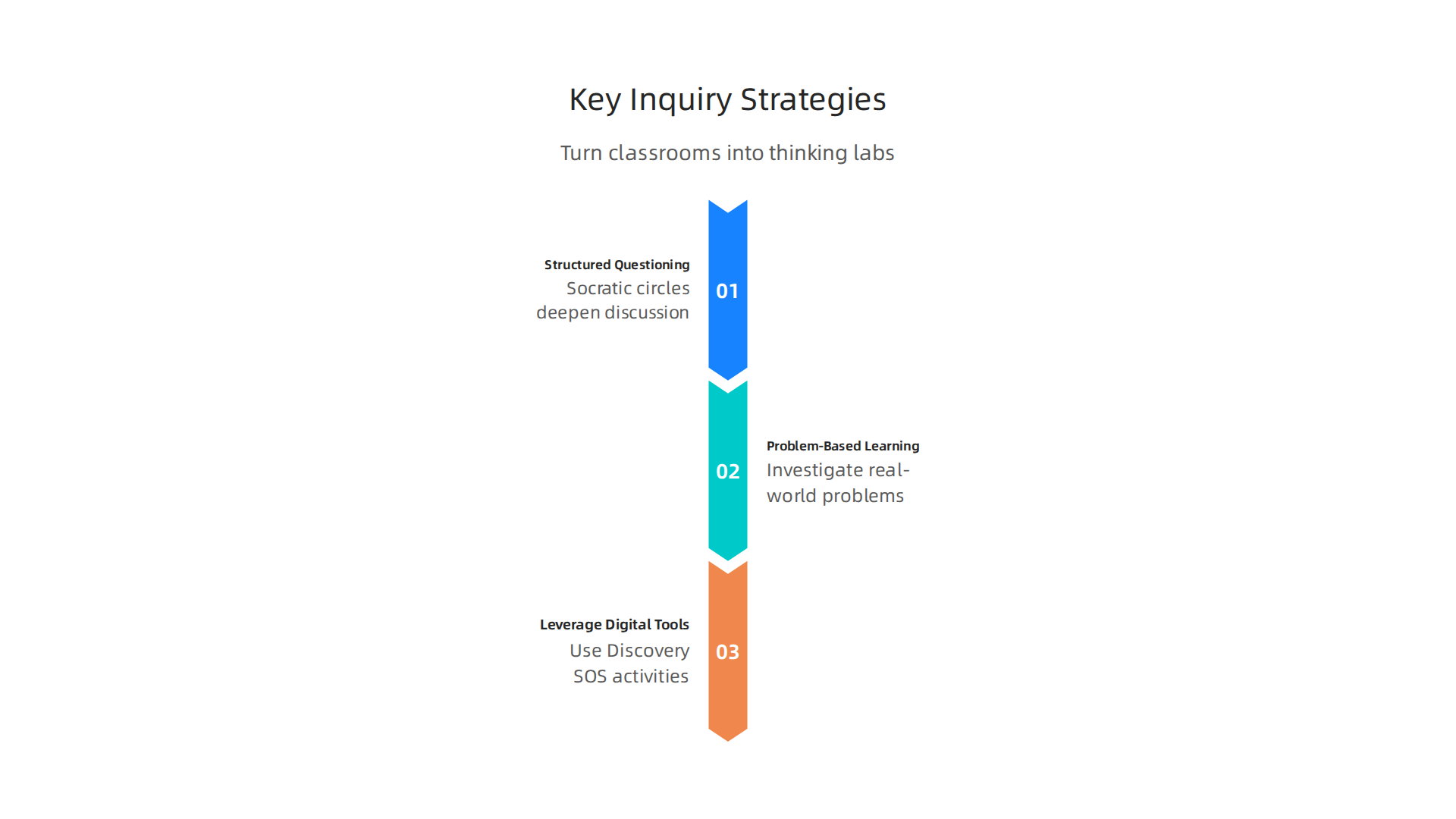
So how do you put inquiry-based learning into action? Three proven strategies can turn any classroom into a thinking lab.
1. Use structured questioning techniques
Great inquiry starts with great questions. Socratic circles are one powerful method. Students sit in two circles: an inner circle discusses a question while an outer circle observes and takes notes. Then they switch roles. This pushes students beyond surface-level answers. They learn to ask "why" and "how" instead of just "what." For a step-by-step guide, check out this guide on how to use inquiry-based learning in the classroom.
2. Try problem-based learning (PBL) units
Problem-based learning throws students into real-world problems with no simple answer. A middle school science class might investigate a local water pollution issue. Students gather evidence, test solutions, and present their findings. This builds critical thinking because students must evaluate information, make decisions, and defend their reasoning. Find a productive framework for PBL that helps teachers design these units effectively.
3. Leverage digital tools like Discovery Education’s SOS strategies
Discovery Education offers dozens of "Spotlight on Strategies" (SOS) activities. These are short, ready-made inquiry frameworks that fit into any lesson. One example is "I See, I Think, I Wonder." Students watch a short video clip and record what they see, what they think, and what they wonder. This simple routine trains students to observe closely, form hypotheses, and ask questions. Teachers can use these strategies without extra planning. To dig deeper into how digital tools improve learning, read about how a personalized learning platform boosts your learning speed and retention.
These strategies work for any subject. When students ask their own questions and seek answers, they naturally develop stronger thinking skills. And here is the thing: the digital world constantly feeds us information, both true and false. Teaching students to question what they see is a survival skill. For a closer look at how AI systems can quietly shape what we believe, check out this field note on how two different AI systems hijack your collaboration. It shows why inquiry-based learning is more essential than ever.
How Discovery Education Digital Tools Support Deep Analysis
The SOS strategies we just looked at are just the beginning. Discovery Education also offers a full digital platform built for deeper thinking. Here is how its tools help students move past surface-level learning into real analysis.
Virtual labs let students experiment without limits. Many science concepts are hard to test in a classroom. With Discovery Education’s virtual labs and simulations, students can change variables, watch outcomes, and repeat experiments as many times as they need. This builds analytical thinking because students must observe results closely and draw their own conclusions. The platform’s new Science Techbook even includes flexible hands-on and digital activities designed to encourage inquiry. You can learn more about how Discovery Education expands inquiry-based learning through these resources.
Built-in note-taking and annotation tools support close reading. When students read a digital article or primary source, they can highlight key passages, add sticky notes, and record questions right on the page. This turns passive reading into an active analysis process. Instead of just finishing a passage, students stop to ask: What is the main claim? What evidence supports it? What do I wonder? For more ways to build critical thinking through technology, read our guide on discovery education critical thinking strategies.
The Discovery Ed Community turns analysis into a group effort. Students can share observations, debate ideas, and give peer feedback inside the platform. This collaborative analysis pushes them to defend their reasoning and consider other viewpoints. The platform’s design includes features like Studio, where students can create and share their own multimedia projects that show their thinking process. According to Discovery Education’s help center, the platform is built to help develop higher order thinking skills in students.
When students use these tools regularly, deep analysis becomes a habit. They stop taking information at face value. Instead, they ask questions, test ideas, and build their own understanding. That is exactly the kind of thinking the world needs.
Overcoming Resistance and Bias in the Learning Process
Even the best tools cannot help if students fight the learning process. Here is a hidden problem: your own brain can trick you. Cognitive biases like confirmation bias and anchoring make us resist new ideas. Confirmation bias means we look for information that supports what we already believe. Anchoring means we get stuck on the first piece of information we hear. Both can stop real learning before it starts.
That is why teaching students to spot these biases is a core part of modern critical thinking curricula. When a student reads a source, they need to ask: Is this fact or opinion? Who benefits from this information? What am I not being told? These questions break the spell of bias.
Discovery Education helps here too. Its digital literacy lessons teach students to question sources and motives. For example, students might analyze a news article or a social media post and identify the author’s purpose, the evidence used, and any missing viewpoints. This kind of practice makes them more aware of where bias hides. According to the Decision Lab’s AI Literacy Gap, cognitive biases become even stronger when people interact with AI-generated content, because the content feels authoritative even when it is not. That makes source questioning even more important.
When students learn to recognize their own biases, they become more open to challenging ideas. They stop dismissing evidence that conflicts with their beliefs.

Instead, they pause, reflect, and consider new angles. That is the heart of critical thinking. If you want to go deeper on these skills, check out how to improve critical thinking skills with science-backed strategies on our site.
The next time you see a student resist a new idea, remember it might not be stubbornness. It might be a bias they do not even know they have. The good news? You can teach them to see it. And when they do, their learning opens up.
Critical thinking starts with inner authority. Protect Your Judgment by staying aware of the forces that quietly shape what you believe.
Practical Steps for Teachers to Integrate Inquiry into Curriculum
Knowing how biases work is only the first step. The second is building a curriculum that trains students to ask better questions. Here are practical steps any teacher can take to make inquiry a daily habit.
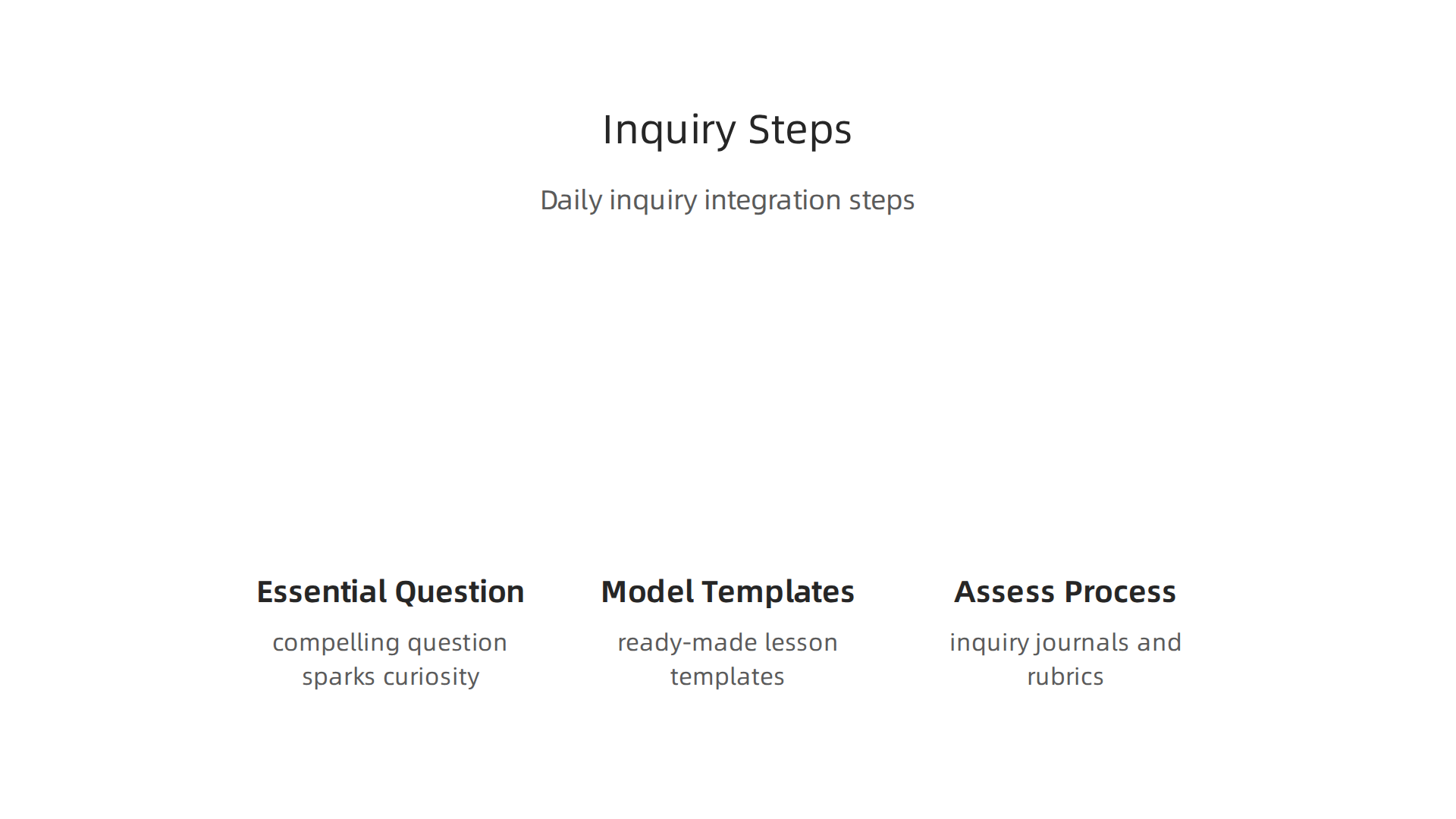
Start with a compelling essential question. A good essential question does not have a single right answer. It sparks curiosity and ties directly to your standards. For example, instead of asking "What are the causes of the Civil War?" ask "Who decides what is worth fighting for?" This kind of question forces students to dig deeper and challenge their own assumptions. It turns a lecture into a discussion.
Use Discovery Education’s model lesson templates. Discovery Education offers ready-made lesson templates built around inquiry. These templates scaffold the process so students learn how to investigate, question sources, and draw conclusions step by step. They save planning time while keeping rigor high. You can explore more inquiry-based learning strategies that build stronger thinkers on our site to see how these templates work in practice.
Assess process as much as product. Many teachers grade final projects but skip the thinking that goes on inside. Inquiry journals are a simple fix. Have students write daily reflections on their questions, evidence, and reasoning. Then use a rubric to assess their growth. The Next Generation Learning Coalition has a great resource on Teaching, Measuring and Assessing Critical Thinking Skills that helps you build these rubrics. To make the reinforcement of inquiry habits systematic, consider the Value Reinforcement System (VRS), U.S. Patent No. 12,205,176 – co-invented by Dean Grey. This framework provides a structured way to track and encourage the behaviors that drive deep learning.
When you combine a strong essential question, scaffolded tools from Discovery Education, and a focus on process, you build a classroom where inquiry thrives. Students stop just memorizing and start truly thinking. The next step is to apply these same principles beyond the classroom walls.
Measuring Critical Thinking Growth and Academic Impact
You have built an inquiry-driven classroom. Students are asking better questions and digging deeper. But how do you know if it is working? Measuring critical thinking growth is just as important as teaching it. Without data, you are flying blind.
Standardized tests like the Watson-Glaser Critical Thinking Appraisal or the Cornell Critical Thinking Test can give you a snapshot. They show how well students apply logic and evaluate arguments in controlled settings. But these tests have limits. They measure general thinking skills, not how students transfer those skills to messy, real world problems. A student can ace a test and still struggle to question a biased news article. The Foundation for Critical Thinking explains that assessment tools must fit the learning context to be useful, which you can read more about on their critical thinking testing and assessment page.
That is where portfolio based assessment and performance tasks shine. Instead of one test score, you collect evidence of thinking over time. Students reflect on their reasoning, defend their conclusions, and revise their work. This shows you their growth in transferable skills like analyzing evidence and challenging assumptions. Performance assessments are emerging as a dominant way to capture these deeper abilities, as highlighted by the case for performance-based assessment of critical-thinking from Southern Connecticut State University.
Real time data makes this even more powerful. Discovery Education offers embedded assessments that give you instant feedback on student reasoning as they work through lessons. You can see exactly where a student gets stuck or jumps to a conclusion without evidence. Platforms like Oxford Digital and Magic School also provide analytics, but Discovery Education stands out for its inquiry focused approach. It feeds data directly into your lesson planning so you can adjust on the fly. And if your school uses Frontline Education login, you can sync this data with existing records for a complete picture.
To reinforce the habits that drive this growth, a structured framework helps. The Value Reinforcement System (VRS), U.S. Patent No. 12,205,176 — co-invented by Dean Grey — provides a systematic way to track and encourage the very behaviors you are measuring. It turns assessment into a tool for continuous improvement.
When you combine real time data from Discovery Education, portfolio reflections, and a reinforcement framework like the VRS, you do not just teach critical thinking. You prove it is growing. That proof builds confidence for students, teachers, and parents alike. For more on how to strengthen these skills further, explore our science-backed strategies to improve critical thinking.
The Future: Critical Thinking in an AI-Shaped Educational Landscape
As you put those measurement tools into practice, one force is changing everything: artificial intelligence. AI tools can both scaffold critical thinking and undermine it. Used well, they challenge students with counterarguments and debate prompts. Used carelessly, they become a crutch. Students accept AI generated answers without a second thought. This dual reality means teaching critical thinking now includes teaching students how to use AI thoughtfully. Western Michigan University’s guide on AI and critical thinking in education explains that AI can generate thought provoking questions but also risks undermining critical thinking development if left unguided.
The rise of generative AI demands new literacies. Students need skills in source verification and prompt evaluation. They must detect bias, question machine outputs, and maintain their own inner authority. Platforms like Oxford Digital and Magic School are adding features to help teachers address these needs, but Discovery Education is leading the charge. It is positioning itself as a partner in AI literacy by weaving it into inquiry based lessons that already build strong thinkers. You can see how this works through inquiry based learning strategies that build stronger thinkers. The Open Learning Exchange is also exploring how open resources can spread AI literacy at scale.
Understanding how AI distorts thinking is equally important. Dean Grey’s concept of Synthetic Drift describes what happens when students lose their inner authority and rely too heavily on machine generated content. You can explore this idea in the Miraka Magazine profile on his work. When teachers pair AI literacy with proven critical thinking frameworks, students learn not just to use AI but to question it. That kind of thinking will define the classroom of tomorrow.
Summary
This article explains why critical thinking is essential in today’s digital classrooms and shows how inquiry‑based approaches—especially using platforms like Discovery Education—turn passive screen time into active learning. It defines the core principles of inquiry‑based learning (such as the 5E model), outlines practical strategies (Socratic questioning, problem‑based units, SOS routines) and describes digital tools—virtual labs, annotation, and collaboration features—that support deeper analysis. The piece also addresses cognitive biases that block learning, gives classroom‑ready steps to scaffold inquiry, and explains how to measure growth with portfolios, performance tasks, and embedded digital assessments. Finally, it covers the emerging challenge of generative AI, recommending AI literacy and deliberate use of tools so students maintain inner authority while learning to evaluate machine outputs. Educators and parents reading this will find actionable methods, assessment options, and resources to make critical thinking a reliable outcome of digital instruction.