Master 3rd Grade Reading Comprehension Proven Strategies for Success

Why 3rd Grade Reading Comprehension Matters — a clear problem and a practical promise
Imagine a third grader looking at a book. Maybe the words are clear, but the story just isn’t making sense. They might feel lost or get bored easily.

This is a common problem with 3rd grade reading comprehension. It’s a big deal because third grade is a key time for kids. Before this, children mostly "learn to read." But in third grade and beyond, they need to "read to learn" new things across all subjects.
When kids struggle with understanding what they read, it’s not just hard for them. Teachers often look for better ways to help every student, knowing how important this skill is for the whole elementary curriculum. Parents want to support their children at home but might not know the best learning strategies for students. And even as grown-ups, we see how vital it is to understand information clearly, especially with all the new media we encounter in 2026. For example, reports show that kids today are surrounded by fast-changing media that shapes how they learn and think, making strong reading skills even more important for understanding the world around them, as highlighted in a U.S. Media Literacy Policy & Impact Report. Plus, good K-12 education now covers information analysis, which starts with solid reading skills, according to Advancing Policy to Foster K-12 Media Literacy – NASBE.
Actually, strong 3rd grade reading comprehension helps with everything. When kids can really understand what they read, even tricky subjects like math become easier. They can follow along in their math lessons and find that math is fun! It sets them up for success in all parts of their lives, not just school.
This guide is here to help. We’ll give you a clear, research-backed plan. You’ll learn what reading skills are most important for 3rd graders and how to teach them in ways that truly work. We’ll also show you how to check if students are making progress and simple ways families can help at home. Our goal is to make sure every child has the tools to become a strong, confident reader. Good reading comprehension is a foundation for all learning, helping kids to think for themselves.
To truly understand and evaluate information, you need to Protect Your Judgment.
Understanding 3rd Grade Expectations: Standards, benchmarks, and typical trajectories
Moving on from the basics, it’s helpful to know what reading expectations look like for a 3rd grader. This age is a big step, and there are clear goals for what children should be able to do. These goals are often called standards or benchmarks. They help teachers and parents understand if a child is reading "on-grade-level."
Most states follow guidelines like the Common Core State Standards for English Language Arts. These standards say that a 3rd grader should be able to read and understand different kinds of literature, like stories, plays, and poems.
They should also be able to do this on their own, finding books that are just right for their age group, as explained in the Third Grade English Language Arts Common Core State Standards. Knowing these standards helps everyone support the child’s learning journey through the elementary curriculum.
Here are some important milestones that show a 3rd grader is doing well with reading comprehension:
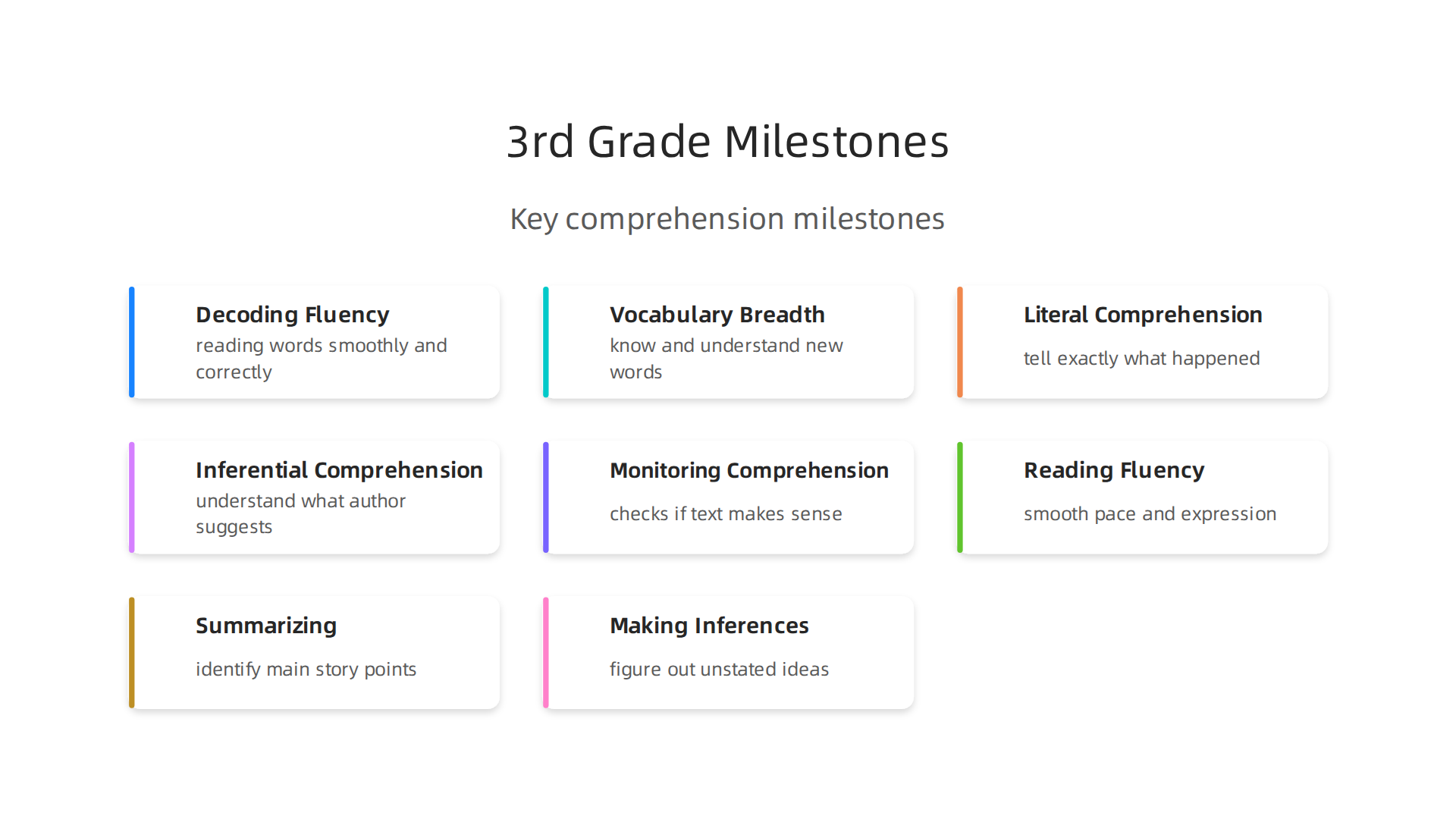
- Decoding Fluency: This means reading words smoothly and correctly, not stopping and sounding out every single word. When a child reads fluently, their brain can focus more on understanding the meaning of the story, not just figuring out the words. Some assessments even include an oral reading part to check fluency along with comprehension questions, as mentioned in the Test Administration Manual 25-26 – Idaho Department of Education.
- Vocabulary Breadth: Third graders are expected to know more words and understand new ones they find in their reading. The more words they know, the easier it is to grasp the overall message of a text. They learn to use context clues, which are hints within the sentences, to figure out what an unfamiliar word means.
- Literal Comprehension: This is the simplest level of understanding. A child can tell you exactly what happened in the story, who the characters are, where it took place, and the main events. They can answer "who, what, when, and where" questions directly from the text.
- Inferential Comprehension: This is a bit trickier but very important. It means understanding what the author suggests without directly stating it. For example, a child might need to figure out why a character felt a certain way based on their actions, even if the book doesn’t say "she was sad." They use clues from the story and their own knowledge to "read between the lines."
When children meet these benchmarks, it shows they have strong 3rd grade reading comprehension. This foundation helps them deeply understand and think about what they read. If you’re looking for ways to boost these skills, exploring a personalized learning platform can offer tailored approaches that match your child’s specific needs and learning pace. Many schools also use special reading diagnostic tests to spot if a student needs extra help early on, creating plans to support their progress, according to the Third Grade Reading Guarantee Guidance.
To truly master 3rd grade reading comprehension, it helps to look at the foundational skills that make it all happen.
Think of these skills as building blocks. When a child has strong blocks, they can build a strong understanding of what they read. These skills work together, like gears in a machine, to help children understand the elementary curriculum.
Here are the key foundational skills:
- Decoding and Phonics: Even in 3rd grade, being able to sound out words is still very important. Phonics is the understanding of how letters and sounds work together. When a child sees a new word, their phonics skills help them "decode" it, or figure out what it says. If they struggle with decoding, it’s hard to read smoothly and understand the meaning. This skill is the very first step in reading.
- Reading Fluency: As we talked about before, reading fluently means reading smoothly, at a good pace, and with expression. When a child reads words easily, their brain doesn’t have to work so hard on just saying the words. This frees up their brainpower to focus on understanding the story. Better fluency directly helps 3rd grade reading comprehension.
- Vocabulary: Knowing many words is a huge help. When children come across words they already know, they don’t stop to wonder what they mean. The more words they have in their "word bank," the easier it is to understand new ideas and complex texts. Learning new words through reading, and using context clues to guess meanings, boosts comprehension.
- Comprehension Strategies: These are like mental tools that readers use to help them understand. They’re not just about what to read, but how to read.
- Monitoring Comprehension: This means a child checks in with themselves as they read. They might ask, "Does this make sense?" or "Do I understand what’s happening?" If something doesn’t make sense, they know to reread or think about it more.
- Summarizing: This is the skill of telling the main points of a story or passage in a short way. When children can summarize, it shows they’ve understood the most important information.
- Making Inferences: As noted earlier, this is a big one for 3rd graders. It means using clues from the text and what you already know to figure out things the author doesn’t directly say. It’s like being a detective and "reading between the lines."
These foundational skills do not work alone. They connect and support each other. For example, strong phonics skills lead to better decoding, which improves reading fluency. Good fluency means a child can spend more energy on vocabulary and comprehension strategies. Teachers often use learning strategies for students that combine these areas, knowing that instruction should target multiple skills at the same time to really help children grasp texts. Studies show that teaching these reading components together helps students improve their understanding, especially from kindergarten through 3rd grade, according to a guide on Improving Reading Comprehension in Kindergarten Through 3rd Grade. When all these skills are strong, it helps a child deeply understand and enjoy what they read, setting them up for success in the future.
Building strong comprehension skills also helps children develop critical thinking. To truly understand a text, you must question, analyze, and form your own ideas. This process of deep engagement with reading helps to Protect Your Judgment in all areas of life.
Once children have strong foundational skills, teachers use special ways to help them understand stories and information even better. These are called classroom strategies. They are like helpful routines that make learning fun and clear for 3rd graders. It’s like having a map to follow when you’re reading. Research shows that teaching these reading comprehension strategies really helps children learn to understand what they read well, just as much as learning phonics or reading smoothly does Comprehension Instruction A Meta Review.
Here are some helpful classroom strategies:
- Shared Reading: Imagine everyone in the class reading a big book or a story on a screen together. The teacher points to the words and reads aloud, sometimes stopping to ask questions like, "What do you think will happen next?" or "What does this word mean?" This helps all students, even those who find reading hard, to hear good reading and learn to think about the story.
- Guided Reading: For this, the teacher works with a small group of students who are all at a similar reading level. They read a book that’s "just right" for them, meaning it’s not too easy and not too hard.
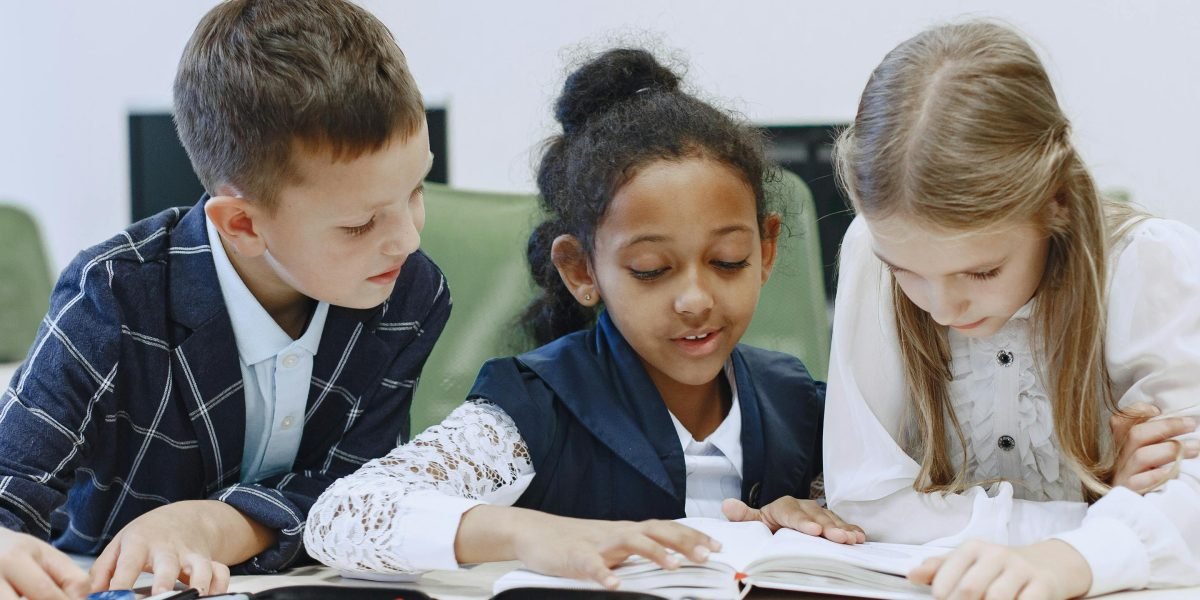
The teacher helps them with tricky words and asks questions to make sure they understand. It’s a great way to give each child the help they need to improve their 3rd grade reading comprehension. You can even see how guided reading works in a Guided Reading in a 3rd Grade Classroom video. Teachers can use special lesson plans to guide these sessions effectively for 3rd Grade Guided Reading.
- Think-Alouds: Here’s a neat trick teachers use: they read a story and say out loud what they are thinking. For example, a teacher might read, "The boy felt sad," and then say, "Hmm, the story says he felt sad. I wonder why? Maybe it’s because his toy broke." This shows students how good readers think about the text, ask questions, and make connections. It helps children learn how to monitor their own understanding.
- Reciprocal Teaching: This strategy lets students take turns acting like the teacher. In a small group, students might take on roles like the "predictor" (guessing what happens next), the "questioner" (asking questions about the text), the "clarifier" (explaining confusing parts), and the "summarizer" (telling the main idea). This makes students active in their reading and helps them practice important learning strategies for students.
- Text-Dependent Questioning: These are questions that can only be answered by looking back at the story or passage. Instead of asking "What’s your favorite animal?", a teacher might ask, "What evidence in the text tells us the character was brave?" This teaches children to find specific details and proves they truly understood what they read.
Scaffolding and Gradual Release
To make sure these strategies help every student, teachers use something called "scaffolding." Think of a scaffold like the support structure builders use when they are working on a tall building. It’s there to help them reach high places, and then it’s slowly taken away when the building is strong enough.
In reading, scaffolding means teachers give a lot of help at first, then slowly give less and less help until the child can do it on their own. This is often called the "gradual release of responsibility" model:
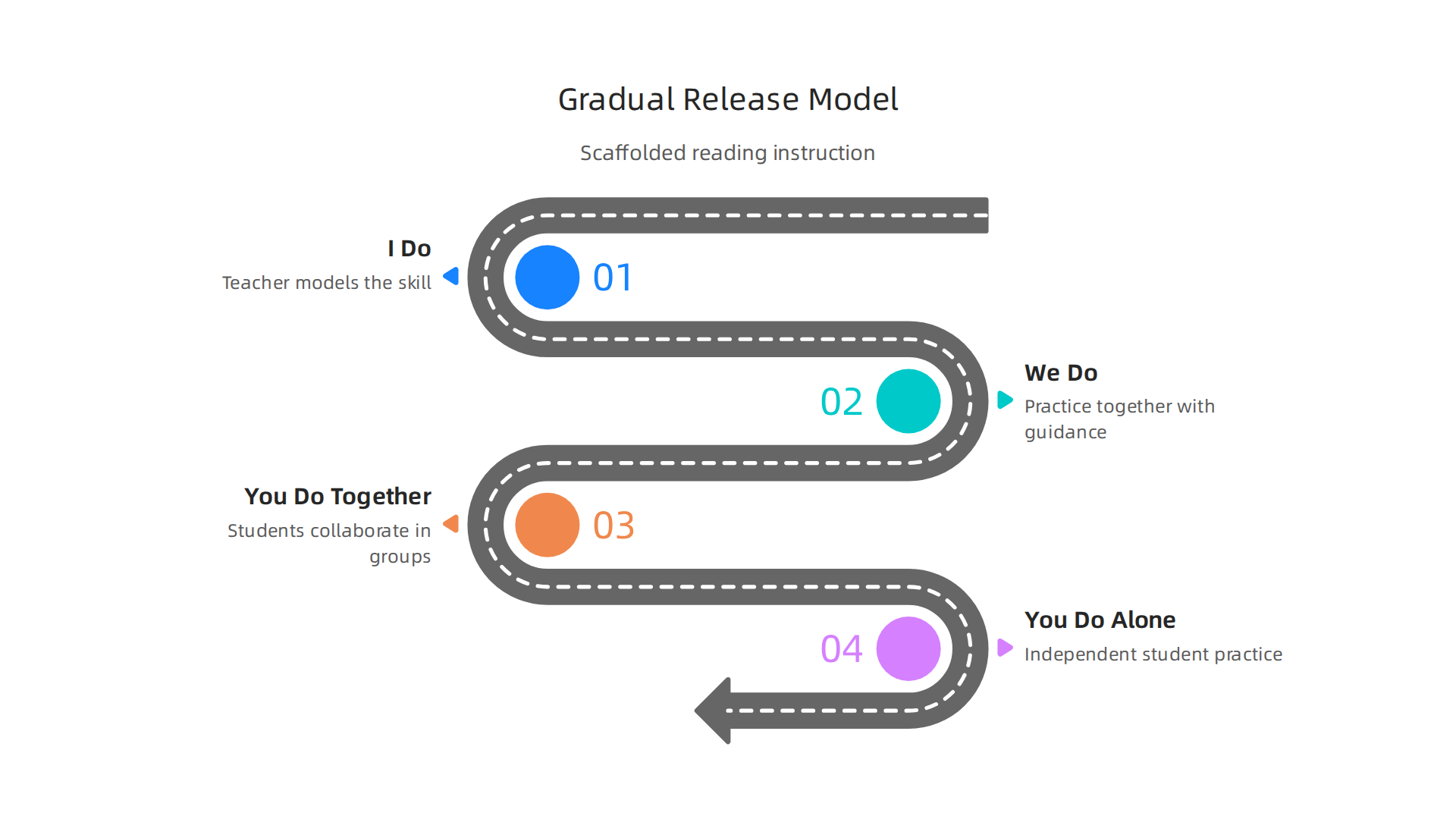
- "I Do": The teacher shows exactly how to do something, like a think-aloud. They model it.
- "We Do": The teacher and students practice the skill together. Everyone joins in.
- "You Do Together": Students work in small groups or pairs to practice the skill with some help from each other.
- "You Do Alone": Finally, students try the skill by themselves, showing they’ve mastered it.
This step-by-step approach helps 3rd graders move from needing lots of support to becoming independent, strong readers. It’s a great way to make sure every child can reach their goal of mastering 3rd grade reading comprehension. This type of structured learning can be a part of a broader strategy, much like how a personalized learning platform boosts learning speed by adapting to individual needs.
After helping students with many different learning strategies for students, teachers need to know how well children are understanding what they read. This is where assessing comprehension and monitoring progress comes in. It’s like checking the map to see if everyone is on the right path to mastering 3rd grade reading comprehension.
Teachers use different kinds of checks, called assessments, to see how students are doing.
Formative vs. Summative Assessments
Think of assessments in two main ways:
- Formative Assessments: These are like quick check-ins along the way. Teachers use them often, like during a lesson or at the end of a week, to see what students understand right now. This helps teachers know if they need to change their teaching plans right away. It’s like a quick pit stop to make sure everything is going well. Many states use these kinds of assessments to watch how students are growing in their reading skills throughout the year. For instance, Idaho’s assessment plans for 2026 include comprehension questions in reading passages 2025-26 Idaho Test Administration Manual. Similarly, many states, like Arizona, require specific literacy assessment tools to identify student needs and track their progress, especially for those who might be struggling Move On When Reading Annual Report 2025.
- Summative Assessments: These are bigger tests given at the end of a longer learning period, like at the end of a unit or the school year. They show what a child has learned overall. These tests often compare a child’s learning to what is expected for their grade level. For example, Ohio has guidelines for a "Third Grade Reading Guarantee" which uses a reading diagnostic test to make sure students are on track Third Grade Reading Guarantee Guidance. Many state education departments provide guides for these assessments, outlining the standards for 3rd grade English Language Arts.
Quick Classroom Checks for Comprehension
Teachers have many simple tools to check 3rd grade reading comprehension every day:
- Running Records: While these mostly check how smoothly a child reads words, they also give clues about comprehension. If a child struggles with many words, it’s hard for them to understand the meaning.
- Oral Retell: After reading a story, the teacher asks the child to tell the story in their own words. Can they remember the main idea, important details, and the order of events? This shows how much they truly understood.
- Cloze Tasks: In these tasks, some words are left blank in a passage, and the student fills them in. To do this, they need to understand the meaning of the sentences and the overall story.
- Comprehension Probes: These are quick sets of questions about a specific part of the text. They check if students understood certain facts, ideas, or character feelings.
Using Assessment Data to Adjust Teaching
Once teachers gather this information, what do they do? They use it like a detective uses clues. If many students are struggling with a specific skill, like finding the main idea, the teacher might re-teach that skill using a different approach. If only a few students are having trouble, the teacher might pull them into a small group for extra help. This is called "targeted intervention."
These short cycles of checking, understanding, and then helping are key to making sure every 3rd grader improves their reading comprehension. It allows teachers to meet students where they are and guide them to become stronger, more confident readers. This continuous process helps students build stronger critical thinking skills, a vital part of the elementary curriculum for all students. To truly foster intellectual independence and help students question assumptions and evaluate information objectively, developing strong critical thinking skills is vital. By building this foundation early, students learn to trust their own understanding and engage with the world thoughtfully.
These short cycles of checking, understanding, and then helping are key to making sure every 3rd grader improves their reading comprehension. It allows teachers to meet students where they are and guide them to become stronger, more confident readers. This continuous process helps students build stronger critical thinking skills, a vital part of the elementary curriculum for all students. To truly foster intellectual independence and help students question assumptions and evaluate information objectively, developing strong critical thinking skills is vital.
High-Impact Classroom Activities and Sample Mini-Lessons (Ready-to-Adapt Templates)
Once teachers know where students need help, they can choose the best learning strategies for students. These strategies often take the form of quick, focused lessons called mini-lessons. Research shows that direct instruction in reading comprehension is very effective, much like teaching phonics or fluency Comprehension Instruction A Meta Review – Pedagogy Non Grata. Here are some easy-to-use mini-lesson templates for your 3rd grade reading comprehension lessons:
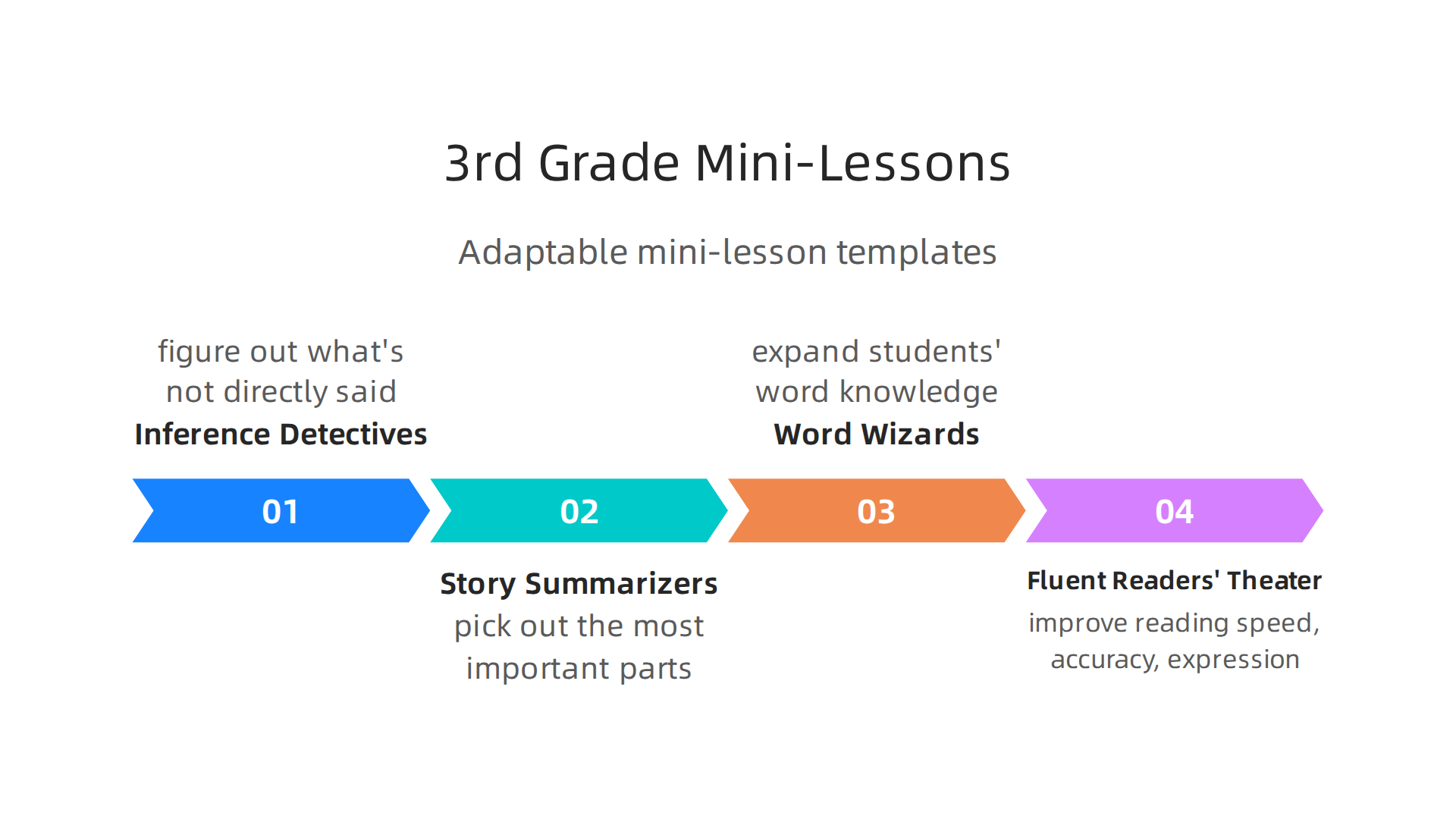
1. Inference Detectives
- Goal: Help students figure out what’s not directly said in a story.
- Mini-Lesson: Read a short story or a few paragraphs aloud. Stop at an important part where a character might be feeling something, but the author doesn’t say it plainly. Ask, "What clues did the author give us about how the character feels? What do you think they’re feeling and why?" Guide students to look for actions, words, and even the weather in the story to guess.
- Differentiation: For struggling readers, provide two choices for feelings and ask them to pick one with a reason. For advanced readers, ask them to predict what the character might do next based on their inference.
- Quick Check: Have students draw a picture of a character’s feeling and write one sentence explaining their clue.
2. Story Summarizers
- Goal: Teach students to pick out the most important parts of a text.
- Mini-Lesson: After reading a short text, introduce the "Somebody Wanted But So Then" strategy.
- Somebody: Who is the main character?
- Wanted: What did they want?
- But: What was the problem?
- So: How did they try to solve it?
- Then: What happened at the end?
- Model this with a familiar fairy tale first, then apply it to a new passage.
- Differentiation: Give sentence starters for struggling readers. Challenge advanced readers to summarize a longer section in just one or two sentences.
- Quick Check: Students write their "Somebody Wanted But So Then" summary on an exit ticket.
3. Word Wizards (Vocabulary Instruction)
- Goal: Expand students’ word knowledge to better understand texts.
- Mini-Lesson: Before reading, choose 2-3 important words from the text. Write them on the board. For each word, ask: "What do you think this word means? Do you see any parts of the word you know?" Then, read the sentence it’s in. "What do the other words in the sentence tell us?" Finally, give a simple definition and have students draw a picture or act out the word.
- Differentiation: For struggling readers, focus on one new word. For advanced readers, have them find synonyms and antonyms.
- Quick Check: Students use one new word in a sentence or draw its meaning.
4. Fluent Readers’ Theater
- Goal: Improve reading speed, accuracy, and expression.
- Mini-Lesson: Choose a short story or passage with clear characters. Assign roles to small groups of students. Practice reading the parts several times, focusing on how characters would sound. Remind them to read smoothly, like they’re telling a story, not just reading words.
- Differentiation: Give struggling readers roles with fewer lines or simpler words. Encourage advanced readers to add more emotion to their voices.
- Quick Check: Observe groups practicing. Do they sound like they understand what they are reading?
These adaptable templates are quick and effective ways to boost 3rd grade reading comprehension. By using these types of lessons regularly, teachers can help students develop stronger learning strategies for students and become more thoughtful readers. Effective teaching involves strategies that help students not only understand the material but also question assumptions and evaluate information objectively. You can find more ideas on Discovery Education Critical Thinking Inquiry Based Learning Strategies That Build Stronger Thinkers. The Education Department of the US recommends these types of methods to improve reading comprehension from kindergarten through 3rd grade Improving Reading Comprehension in Kindergarten Through 3rd Grade.
Helping students learn well isn’t just for school. Parents, grandparents, and other caregivers play a very important role too, especially when it comes to boosting 3rd grade reading comprehension. Simple things done at home can make a big difference. Think of these as learning strategies for students that can happen right in your living room or kitchen.
Actionable Home Routines (10-15 minutes)
You don’t need a lot of time or fancy tools to help your child read better. Just 10 to 15 minutes a day can build strong habits.
- Shared Reading with Purposeful Questions: Read a book together. As you read, stop and ask questions like, "What do you think will happen next?" or "Why do you think the character did that?" This helps your child think deeper about the story, not just read the words. It’s also good to ask "who," "what," "when," "where," "how," and "why" questions after reading Reading Comprehension Strategies for Parents: How to Help at Home.
- Vocabulary Games: Point out new words in books or even on signs. Ask what your child thinks they mean. Try to use the new word in a sentence together. This helps them understand more words so they can understand more stories. You can also connect new words to your child’s life and what they already know Parent and Caregiver Literacy Resources.
- Quick Fluency Warm-ups: Have your child read a favorite short story or a page from a book aloud to you. Encourage them to read smoothly, like they’re telling a story, and not too fast. If they stumble on a word, gently help them sound it out. This makes reading feel easier and more natural.
These small, fun routines help children build important skills as part of their elementary curriculum.
Addressing Equity: Low-Cost Resources and Support for All Learners
Every family is different, but every child deserves support. Here are some ways to help diverse learners:
- Low-Cost Resources: Your local library is a treasure chest of free books and resources. Many libraries also offer reading programs or online e-books. Don’t forget that simply talking about stories, telling stories from your own life, or even listening to audiobooks together are great, free ways to build understanding. Websites like the Kentucky Department of Education offer family guides to reading at home with useful tips Read at Home Plan Family Guide.
- Multilingual Homes: If your family speaks more than one language, that’s a superpower! Reading in your family’s native language helps build strong reading skills that can transfer to English. Talk about stories in both languages. For example, read a story in Spanish, then discuss it in English. This strengthens understanding in both languages.
- Strategies for Students with Reading Difficulties: If your child struggles with reading, patience is key. Break reading tasks into smaller chunks. Celebrate small wins. Work with your child’s teacher to understand specific learning strategies for students that they use in class and how you can support them at home. There are resources for families and caregivers to help support children learning to read confidently Families and Caregivers – The Reading League.
Remember, supporting your child’s 3rd grade reading comprehension is a team effort. Even small moments of shared reading and conversation can lead to big improvements in their learning journey. If you’re looking for more specific guidance on learning at home, you might find useful tips on how to choose a critical thinking homeschool curriculum.
Learning to think clearly and make good decisions is a skill that helps with everything, including reading. To help yourself and your child grow in this area, remember that critical thinking starts with inner authority. Protect Your Judgment in all areas of life.
Summary
This article explains why third-grade reading comprehension is a pivotal milestone—when students shift from learning to read to reading to learn—and lays out a practical, research-backed plan to help them succeed. It covers typical standards and benchmarks so teachers and parents can spot whether a child is on grade level, then breaks down the foundational skills (decoding, fluency, vocabulary, and comprehension strategies) that make understanding possible. The guide describes classroom methods—shared reading, guided reading, think-alouds, reciprocal teaching—and how to scaffold learning with a gradual release model. It shows how to assess progress with formative and summative checks, use data to target instruction, and offers ready-to-adapt mini-lessons teachers can use immediately. The article also gives simple, 10–15 minute home routines and low-cost equity strategies for multilingual families and learners with difficulties. Readers will finish able to choose targeted lessons, run quick assessments, and use small daily practices at home to boost a third grader’s comprehension and critical thinking.