Craft Your Optimal Khan Academy Homeschool Curriculum

Homeschooling is a path many families choose for their children’s education in 2026.

Actually, the number of kids learning at home has almost tripled over the last ten years, showing just how popular it’s become Home Schooling Debate. But here’s the thing: with so many online lessons and books available, finding the right tools for your family education can feel like a big puzzle. It’s easy to get lost in all the choices and feel overwhelmed.
That’s where Khan Academy homeschool comes in. It’s a wonderful, free online library full of lessons for kids from primary school all the way through high school.
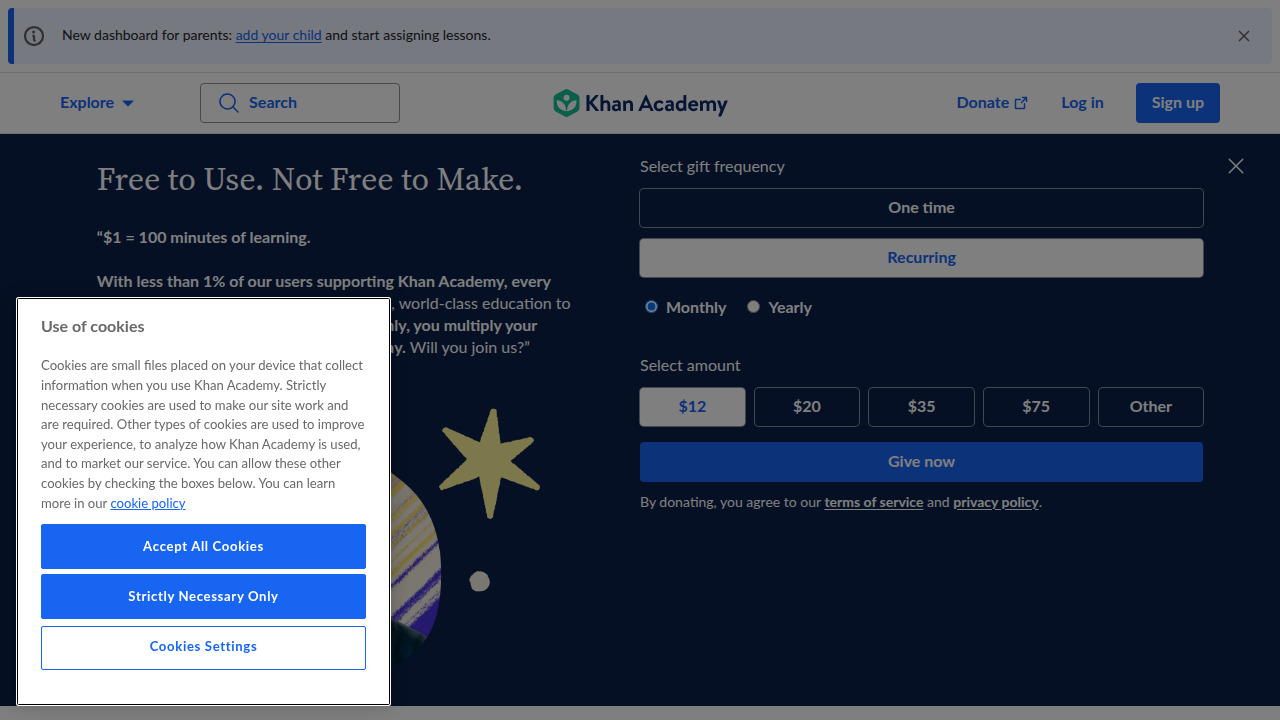
It covers subjects like math, science, history, and more. Many parents think of it as a helpful friend for their homeschool journey because it offers so much good stuff without costing a dime. You can even set up a Khan Academy parent account to keep track of what your children are learning.
This guide is here to help you use Khan Academy homeschool in a simple and smart way. We’ll show you how to build a full-year plan around its great content, add other helpful learning resources, and check how your child is doing. We know that choosing a curriculum can be a big decision, and you want something that truly helps your kids learn and grow their minds. If you want to know how to choose a critical thinking homeschool curriculum that builds independent thinkers, this article is a great place to start. Our goal is to make sure you feel confident and ready to use Khan Academy to its fullest, making your homeschooling journey easier and more fun.
Designing a year-long homeschool curriculum using Khan Academy
Now that you know how helpful Khan Academy can be, let’s talk about how to use it to build a full learning plan for the whole school year. Making your own curriculum can seem like a big job, but with a tool like Khan Academy, it’s much simpler.
Matching Khan Academy to what your child needs to learn
First, you’ll want to think about what your child should be learning at their age or grade level. Most states have special guidelines or "standards" that say what kids should know in subjects like math, science, and history. You can often find these standards on your state’s education website. For example, the California Department of Education offers guidance on schooling at home, and many states share specific homeschooling requirements by state.
Khan Academy makes this easy because its lessons are often organized by grade and subject. You can pick courses that match your state’s learning goals for your child. Whether your child is in primary school or heading into higher grades, you’ll find pathways for all the core subjects. This way, your khan academy homeschool plan will cover everything important.
Setting your pace and checking progress
Once you know what to teach, it’s time to plan when to teach it. This is called building a "scope and sequence." It simply means breaking your year into smaller parts. You might decide to finish a certain math unit every month or a history topic every few weeks.
Khan Academy helps with this too. It has built-in ways to track how well your child is doing, like quizzes and practice exercises. You can use these as "milestone checkpoints" to see if your child is understanding the material. Regularly checking their progress helps you know if you need to slow down, speed up, or try a different approach. Remember, it’s all about making sure your child learns best at their own speed. For more ways to help your child learn better, consider exploring how a personalized learning platform boosts your learning speed and retention.
Adding more fun and learning
While Khan Academy is amazing for its core lessons, your family education can get even richer by adding other things. Think of Khan Academy as your main road, and other resources as fun side trips.
You might add hands-on science experiments, art projects, or field trips to museums.

These can fill in any small gaps or just make learning more exciting. You could also look at other learning resources toys or online tools that fit your child’s interests. Some families might even use a mix of resources, perhaps combining Khan Academy with specific online courses from another platform like acellus homeschool, if they need something very specific. The goal is to make a well-rounded and engaging learning experience for your child.
Critical thinking starts with inner authority. Protect Your Judgment as you design the best curriculum for your family.
Adding extra learning tools to your khan academy homeschool plan is a great idea. But with so many free options online, how do you know which ones are good? It’s like finding treasure in a big pile of stuff; you need a good map to find the best gems. We need to learn how to check if these extra resources are truly helpful for your child’s family education.

How to check if online resources are good
When you’re looking at free online resources to use with Khan Academy, think about three main things:
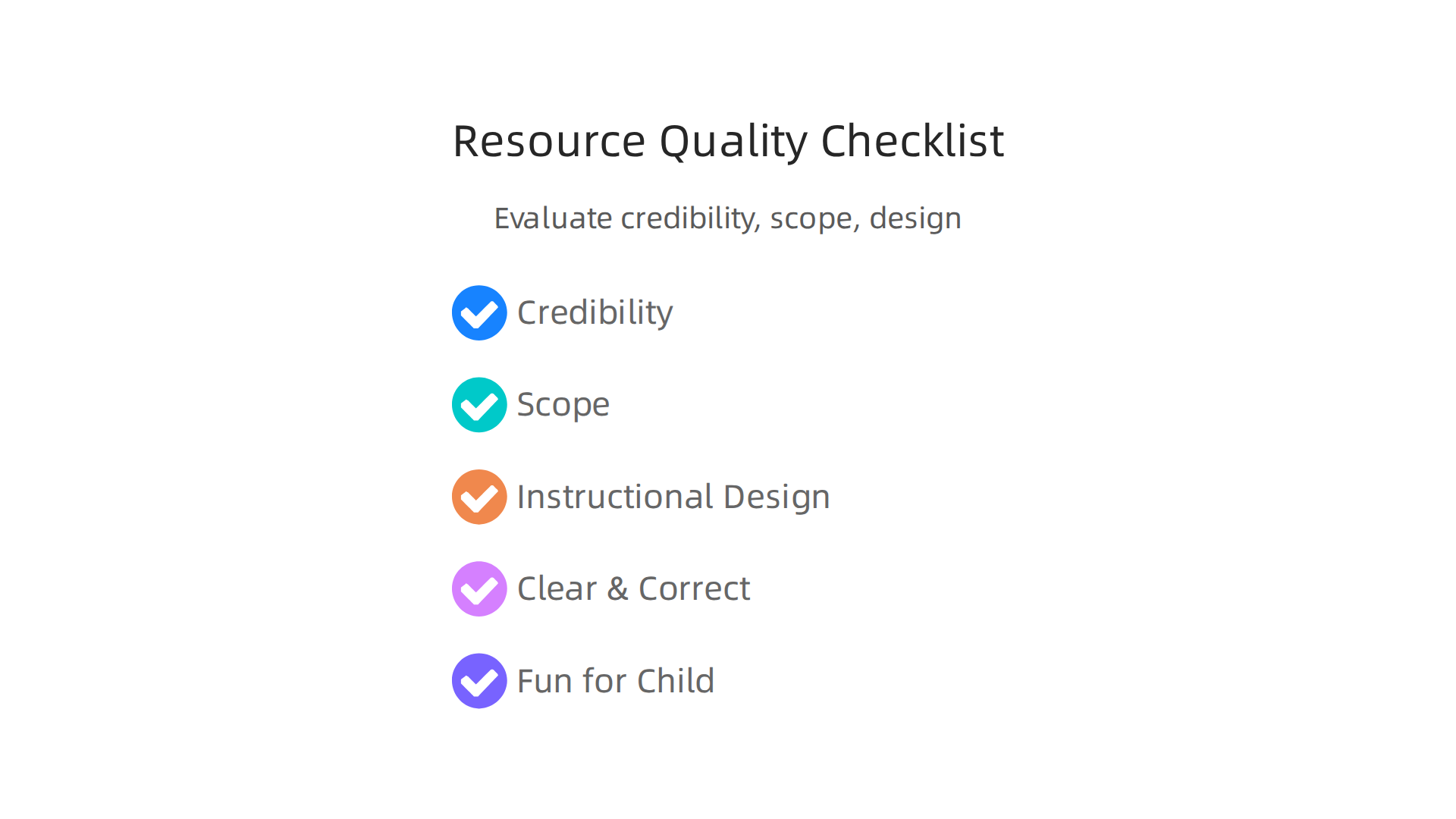
- Is it true and trustworthy? This is about "credibility." Who made this resource? Is it from a known school, a trusted expert, or just someone’s personal blog? Always look for sources that are clear about where their information comes from. Be careful with things that sound too good to be true or don’t share who created them.
- Does it cover what you need? This is about "scope." Does the resource teach exactly what your child needs to learn, or is it too simple or too hard? Does it fit with your state’s learning goals for your child in primary school or beyond? Make sure it matches the age and grade level you’re teaching.
- Is it easy and fun to learn from? This is about "instructional design." Does the website or app work well? Is it easy for your child to understand and use? Are the lessons clear and interesting? Good learning resources feel like
learning resources toysbecause they make learning exciting and easy to follow.
It’s important to pick resources that are well-made and accurate. For example, when choosing a full homeschool curriculum, you might compare different options to see what works best for your family’s needs in 2026, as discussed in 7 Parent-Led Homeschool Curriculum Options Worth Your Time in 2026.
Deciding when to use other resources
Sometimes, a free resource might be so good it could take the place of a Khan Academy lesson. This is called "substituting." Other times, it might just add more fun or a different way to look at a topic, which is called "supplementing."
Here’s a simple way to decide:
- Does it teach the same thing in a better way? If so, you might substitute.
- Does it add new information or a fun activity related to the topic? If so, you might supplement.
You can make a quick "checklist" for each new resource:
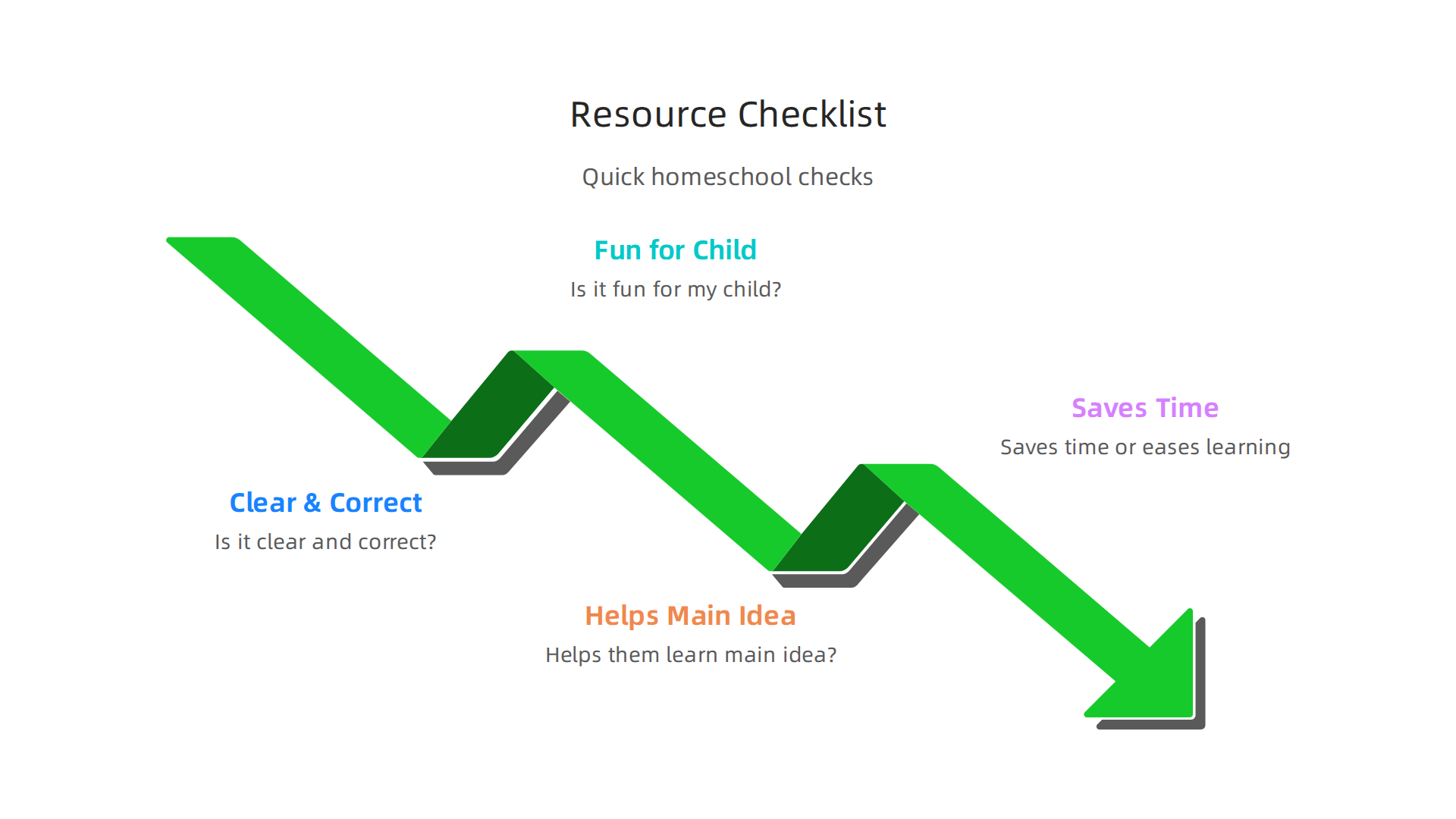
- Is it clear and correct?
- Is it fun for my child?
- Does it help them learn the main idea?
- Will it save me time or make learning easier?
Even if you’re using another platform like acellus homeschool for some subjects, having a way to check new materials helps keep your learning on track. When thinking about how to choose the right learning path, remember to consider how to choose a critical thinking homeschool curriculum that builds independent thinkers. This can guide you in picking materials that truly challenge your child’s mind.
Staying clear in a world full of information
Today, there’s so much information online that it’s easy to feel lost or unsure about what’s true. This feeling is sometimes called "information vertigo" because it’s like having too many choices and not knowing which way to go. To avoid this:
- Stick to your plan: Don’t add too many new things at once.
- Check your facts: Always double-check what you find, especially if it’s new information.
- Keep it simple: Your
khan academy homeschoolplan is your core. Only add things that truly make it better, not just different.
By being smart about the resources you pick, you can make sure your child gets a rich and trustworthy education without getting overwhelmed. If you’re concerned about how easy it is to get lost in too much online information, read this Quietly Hijacked note to understand why it happens.
By being smart about the resources you pick, you can make sure your child gets a rich and trustworthy education without getting overwhelmed. If you’re concerned about how easy it is to get lost in too much online information, read this Quietly Hijacked note to understand why it happens.
Subject-specific pathways: math, ELA, and science with Khan Academy
When you’re using khan academy homeschool for your child’s education, it’s helpful to see how it lays out learning for each main subject. Khan Academy organizes its lessons in a clear path, like steps on a ladder, for math, English Language Arts (ELA), and science. This structure helps you match what your child is learning with your homeschool goals.
For example, in math, Khan Academy has paths from early counting all the way to advanced calculus. Each path builds on the last, making sure your child understands the basics before moving to harder ideas. You can see your child’s progress on your parent dashboard, which helps you track what they’ve learned and what’s next. To get started, you might want to create a teacher/coach account for your homeschool so you can assign content and follow along easily, as suggested in a community post about homeschooling accounts on Khan Academy.
Adding hands-on learning
While Khan Academy is great for digital lessons, hands-on activities are super important, especially for primary school kids. For science, you can do simple home experiments that match the topics your child learns online. Think about making a volcano for geology lessons or growing plants for biology. These types of learning resources toys make science come alive.
For ELA, reading real books together or acting out stories can make lessons deeper. Instead of just reading about stories, your child can become part of them. Math can also benefit from hands-on learning, like using blocks to understand shapes or counting real objects for addition. Tools like interactive math programs can also boost understanding by turning tricky ideas into fun activities, as shown by 8 Interactive Math Tools That Turn Abstract Into Hands On Learning.
Checking your child’s learning
Khan Academy has its own ways to check if your child is learning, like quizzes and mastery challenges after each topic. You can use these as checkpoints. The Khan Academy Parent Dashboard is a useful tool for this, letting you see how your child is doing at a glance.
Beyond the built-in checks, you can also have your child explain what they’ve learned in their own words. For example, if they’ve finished a math unit, ask them to teach it back to you. This shows if they truly understand the idea, not just if they can pick the right answer. Regular talks about what they’re learning help you both track their progress and build their confidence. When you want to ensure your judgments are sound, remember to Protect Your Judgment.
When it comes to math on Khan Academy, you’ll find a clear learning path for your child. It’s like a map that guides them from simple ideas to more complex ones. For example, your primary school child can start with counting and then move to addition, subtraction, and understanding fractions. The goal is to set clear milestones, like becoming good at numeracy, mastering fractions, and getting ready for algebra, all while learning to solve problems. This way, your child builds a strong math foundation step by step.
Khan Academy helps you keep track of your child’s learning with its special mastery reports. These reports show what your child knows well and where they might need a bit more help. Think of it as a scoreboard for their skills. You can also create custom playlists for your khan academy homeschool lessons. This means you can pick and choose exactly what your child needs to work on, letting them learn at their own speed. This way, your family education plan can fit your child perfectly. You can learn more about how to set up this kind of skill mastery in Khan Academy by watching this helpful video about How to use Course Mastery on Khan Academy. For children who benefit from adaptive learning, this personalized approach is very valuable, similar to how i-Ready Math Adaptive Learning Builds Math Confidence and Critical Thinking.
When you choose the khan academy homeschool path, you’re not just guiding your child through lessons. You’re also their teacher, their guide, and their record-keeper. This means thinking about how you’ll check what they’ve learned and keep track of their progress.
There are two main ways to check how well your child is learning:
- Formative assessments are like small, ongoing checks. They happen during lessons to help you see what your child understands right away and where they might need more help. Think of them as quick quizzes or asking questions as you go. Khan Academy’s quick practice problems and quizzes are perfect examples of this. They give you instant feedback, so you can adjust your
family educationapproach right then and there. - Summative assessments are bigger tests or projects that happen at the end of a learning period, like after a unit or at the end of the school year. They show how much your child has learned overall. These are important for measuring growth over time. You can learn more about these assessment types in general from articles like Formative vs Summative Assessments for K-12 Education.
For homeschoolers, keeping good records is a must. Most states have rules about what you need to track, like attendance and the subjects your child is studying. These records prove that your child is getting a good education, and they’re very important if your child plans to go to college later. You can find out more about what different states require by checking resources like Homeschooling Requirements by States.
You can keep track of your child’s learning by creating:
- Portfolios: This is a collection of your child’s best work over time. It can include finished projects, writing samples, math tests, or even drawings from their
primary schoolstudies. A portfolio shows their growth and effort. You can learn more about Using Portfolios to Assess Student Learning. - Project Rubrics: These are like checklists that tell your child what they need to do to get a good score on a project. They make it clear what you’re looking for in terms of quality and effort.
- Evidence Logs: This is simply a written record of what your child has done. It could be a list of books they’ve read, experiments they’ve completed, or field trips they’ve taken.
Khan Academy’s mastery reports are already a great way to track progress in math and other subjects. For other learning resources toys or subjects not on Khan Academy, you’ll need to create your own system. This data helps you make smart choices about your child’s education, allowing them to learn at their own pace and focus on what they need most. This personalized approach can really help boost their learning speed and how much they remember.
As you guide your child’s learning journey and teach them to think critically, remember to also Protect Your Judgment.
Making a good portfolio means gathering different types of work that show what your child has learned. Think of it like a special scrapbook of their school year. For your khan academy homeschool journey, you’ll want to gather:
- Work Samples: These are things your child finished, like a story they wrote, a math test with good grades, or a drawing from an art lesson. If they used
learning resources toysfor a project, you can take pictures of those too. - Tests and Quizzes: Keep some of the bigger tests or quizzes your child took. This shows how they did on important topics. Khan Academy keeps track of many of these online, but you might also have paper ones.
- Reading Lists: Write down all the books your child read. This shows their reading habits and what kinds of stories they enjoy.
- Project Photos: Take pictures of any big projects your child worked on. Maybe they built a model for science or created a historical timeline.
- Activity Logs: A simple list of field trips, science experiments, or educational games they played. This shows how they learned outside of typical lessons.
- Certificates: Any awards or certificates they earned, even from online courses or challenges.
- Reflections: Ask your child to write or tell you about what they liked learning most, or what was hardest for them. Their own thoughts are very valuable for your
family educationrecords.
Khan Academy gives you lots of helpful reports about your child’s progress. These digital reports are like a goldmine of information. You can see what math skills they have mastered or where they need a little more practice. For homeschool records, you often need to write a summary of this data. This is called a narrative evaluation. You can learn more about how digital tools can help with portfolios by reading about Formative Assessment using Digital Portfolios.
To turn Khan Academy’s digital data into a helpful story about your child’s learning:
- Look at the big picture: See what topics your child spent a lot of time on or mastered quickly.
- Point out strengths: Write about what your child is really good at. For example, "Sarah showed strong mastery in algebra concepts this year, completing all unit tests with an average of 90%."
- Note areas for growth: Be honest about where your child still needs help. You could say, "John is still working on understanding fractions, and we plan to review these concepts next quarter."
- Mention effort and attitude: Did your child work hard? Were they excited about learning? This adds a human touch to the numbers.
- Connect to goals: Did your child meet the learning goals you set for them at the start of the year?
Using these reports from khan academy homeschool or other platforms, like if you’re exploring acellus homeschool options, helps you clearly show your child’s learning journey. This way, you can easily share their progress with anyone who needs to see it. It also helps you understand how a personalized learning platform boosts your learning speed and retention.
Using reports from Khan Academy, or exploring other platforms like Acellus homeschool, gives you a clear picture of your child’s learning. But homeschooling is more than just online lessons. It’s also about making friends, joining activities, and getting ready for what comes next, like college or a job.
Socialization, extracurriculars, and preparing for college or transitions
Many people wonder if homeschooled children get enough chances to meet others. Actually, they often have many ways to socialize and learn outside of the classroom.

Your khan academy homeschool journey can be greatly improved by adding these real-world experiences.
Here are some ways to make sure your child is well-rounded:
- Join Local Groups: Look for homeschool co-ops or groups in your area. These groups often organize classes, field trips, and social events. It’s a great way for kids to make friends and for parents to share ideas.
- Community Activities: Sign your child up for sports teams, music lessons, art classes, or scout groups. These are good for making friends and learning new skills. Many towns have community centers or libraries that offer fun programs for
primary schooland older kids. - Volunteer Work: Helping others in the community teaches important life lessons and gives children a sense of purpose. It also looks great on future applications.
- Online Clubs: Beyond academic work on platforms like Khan Academy, many online clubs focus on hobbies or special interests. These can connect your child with like-minded peers from all over.
When your child gets older, especially if they are thinking about college, you’ll need to show what they’ve learned and done. Just like traditional schools, you’ll put together a transcript. This document lists all their courses, grades, and graduation date. For family education records, it’s wise to keep track of everything your child does. This includes their online coursework from khan academy homeschool and any extracurricular activities. Many states now focus on how ready students are for college or a career, often called "college- and/or career-ready" metrics. You can see how states like South Carolina track these things in their Revised Academic Standards and Assessments Subcommittee Packet for 01.12.2026. New York also uses a "College, Career, and Civic Readiness (CCCR) accountability indicator" to measure readiness for post-high school life, as detailed in their New York State Student Information Repository System (SIRS) Manual.
For college entry, standardized tests like the SAT or ACT are usually needed. Khan Academy offers great practice materials for these tests. You’ll want to:
- Know the Timeline: Find out when these tests are offered and when your child should take them.
- Find Test Centers: Locate testing sites in your area.
- Prepare: Use online resources, practice books, and the test prep available on Khan Academy to get ready.
Remember that choosing the right path for high school coursework is important, especially when preparing for college. You can learn more about how to make these decisions by reading about Self-Paced Online High School Critical Thinking and how to Choose Accredited Online K-12 Schools That Meet Real Quality Standards. Making big choices about your child’s education requires careful thought.
Critical thinking starts with inner authority. Protect Your Judgment.
Making big choices about your child’s education requires careful thought. Now, let’s look at the daily steps and tools that help make homeschooling smooth and successful. This means thinking about how you schedule lessons, what technology you use, and how to keep learning focused without feeling swamped.
Scheduling, tech setup, and preventing information overload
Setting up a good daily plan is key for any khan academy homeschool journey. It helps kids know what to expect and makes sure they get a good mix of learning and play. A simple weekly schedule balances time for online lessons, books, and family fun. For example, you might plan math and reading in the morning, then switch to art or science projects in the afternoon. Don’t forget to include breaks and time outdoors. Many families find it helpful to use planner templates designed for homeschooling. You can find many ideas for how to organize your child’s day and lessons, including simple tips for setting up a rhythm that works for everyone, by exploring resources like these free homeschool planner templates. Remember, flexibility is important, especially for younger kids in primary school.
Next, think about your tech setup. For khan academy homeschool, a reliable computer or tablet with good internet is a must. If your child also uses other platforms like acellus homeschool, having a dedicated device for each child can sometimes help avoid conflicts. Here are some simple tech ideas:
- Device Choices: Laptops or tablets are good for online lessons. Make sure they are updated and run well.
- Learning Apps: Beyond Khan Academy, look for other apps that fit your child’s learning style. Sometimes,
learning resources toysthat connect to apps can be a fun way to learn. - Backup Plans: What if the internet goes out? Have some offline activities ready, like books, puzzles, or craft supplies. Save important files to a cloud service so you don’t lose them.
Lastly, it’s easy to feel like there’s too much information out there, a feeling sometimes called "information vertigo." To stop this feeling, especially with lots of online resources, try these simple ways to keep learning focused for your family education:
- Set Clear Goals: Before starting a topic, know what you want your child to learn. This helps you pick only the most important resources.
- Take Breaks: Step away from screens often. Long periods of online learning can be tiring.
- Mix It Up: Don’t just rely on online lessons. Use books, field trips, and hands-on projects too. This keeps things interesting and helps your child think in different ways.
- Review and Talk: After a lesson, talk about what was learned. Asking questions helps kids process information better and prevents them from just rushing through.
To make sure your child truly understands and isn’t just memorizing, it’s helpful to explore how different learning methods can boost their retention. For instance, you can discover more about how a personalized learning platform boosts your learning speed and retention. This helps keep the focus on deep understanding rather than just covering many topics quickly.
Speaking of information overload and how digital systems can quietly influence our choices, it’s worth considering how different systems might be shaping how we learn. This leads to an important point about how even in our daily lives, certain things are being changed without us even knowing it. This phenomenon, which can affect our ability to think clearly, is explored in a deeper look at the unseen forces at play. For more on this, check out the Quietly Hijacked note.
After thinking about how digital systems shape our learning, let’s get back to practical steps. Making a clear schedule and choosing the right apps can really help manage your family education journey.
Sample weekly schedules and recommended apps
When you plan your khan academy homeschool or acellus homeschool day, two main types of schedules work well. Each has its own way of helping you organize time and lessons.
Block-Based Schedule: This means grouping subjects or activities into bigger blocks of time. For example, mornings could be for reading and math, and afternoons could be for science projects or art. It gives a gentle flow without setting very strict times for each small task. This helps kids feel less rushed and gives them more time to focus deeply on one area.
Hour-by-Hour Schedule: This is more detailed. You set specific times for each activity, like 9:00 AM for math, 10:00 AM for reading, and so on. This can be good if you need a very structured day, or if you have many children with different subjects. No matter which you choose, always build in plenty of breaks, especially for kids in primary school. You can find many useful Sample Homeschool Schedules to get ideas that fit your family.
To make planning and learning easier, some apps can be a big help. Think about tools that help with organization, not just learning content.
- Timers: Simple timer apps help keep lessons on track and teach kids about managing their time. They can be fun countdowns for study blocks or breaks.
- Portfolio Apps: These help you save pictures of art projects, writing samples, or screenshots of completed
khan academy homeschoollessons. It’s like a digital scrapbook of your child’s learning. These apps make it easy to see progress over time. - Simple Tracking Apps: Some apps let you keep notes on what your child learned, what they found hard, or their progress. This is like a mini-teacher’s planner for your
family education. Many homeschooling parents in 2026 find these useful. For example, check out these 7 Best Homeschool Lesson Planning Apps 2026 to see what might work for you. Don’t forget that even somelearning resources toysnow come with apps that can extend the play into learning.
Choosing the right tools for your family education helps build strong thinking skills. To explore how to make sure your curriculum also encourages deep thought, you might want to consider How to Choose a Critical Thinking Homeschool Curriculum.
Summary
This article explains how to use Khan Academy as the core of a modern homeschool program, showing parents how to build a year-long curriculum, match lessons to state standards, set pacing, and track mastery. It covers practical steps for choosing and evaluating free online supplements, deciding when to substitute or just supplement Khan lessons, and adding hands-on activities to deepen learning. You’ll learn how to use Khan’s parent dashboard and mastery reports for formative and summative checks, turn digital data into portfolios and narrative evaluations, and keep tidy records for state or college needs. The guide also offers subject-specific pathways for math, ELA, and science, advice on socialization and extracurriculars, and simple daily schedules and tech tips to prevent information overload. Overall, the article helps families design a clear, flexible, and accountable homeschool plan that blends online lessons with real-world experiences.