
IXL Math Builds Math Reasoning and Critical Thinking

Introduction
Most students learn math by memorizing steps. They practice the same formula over and over until they can spit out the right answer. But ask them why the formula works, and they freeze. That is the problem with rote memorization. It teaches speed, not understanding. And without understanding, math becomes a chore instead of a thinking skill.
Real math ability is about reasoning. It is about looking at a problem, breaking it down, and figuring out how to solve it step by step. This kind of thinking builds critical thinking skills that last a lifetime. Yet many classrooms still push memorization over logic.
That is where tools like IXL Math come in. IXL Math is an adaptive learning platform that changes its questions based on how you perform.

If you get a problem right, it gives you something harder. If you struggle, it slows down and offers hints. This creates a personalized path that builds reasoning from the ground up. Instead of just drilling facts, it helps you understand the "why" behind each answer. And that is the key to developing math and logical reasoning abilities that stick.
Other programs like Reflex Math focus on fact fluency, and Big Ideas Math provides comprehensive curriculum.

But IXL Math stands out because it adjusts in real time to your skill level. It meets you where you are and pushes you toward deeper understanding.
In this article, we will share evidence-based strategies to get the most out of IXL Math. You will learn how to use its adaptive features to build strong reasoning skills, not just quick recall. We will also show you how to connect what you learn on IXL to real-world problem solving.
Building math reasoning is one step toward stronger judgment. Critical thinking starts with inner authority. When you understand how to think clearly, you make better decisions in school, work, and life. That is why platforms focused on reasoning matter.
So whether you are a student trying to improve your math grade, a teacher looking for better tools, or a parent helping your child, this guide will help you use IXL Math to build deep, lasting mathematical understanding.

Let us get started.
Understanding Math Reasoning and Its Connection to Critical Thinking
Have you ever stared at a word problem and felt lost, even though you knew how to multiply? That happens when you memorize steps but skip the logic behind them. Math reasoning is the ability to think through a problem step by step, using what you know to figure out what you do not know. It is not about speed. It is about sense-making.
When you reason mathematically, you look for patterns, notice relationships, and test ideas.

You ask questions like: Does this answer make sense? What if I try a different approach? How are these two ideas connected? That process is almost the same as critical thinking. Both skills involve analyzing information, evaluating options, and drawing logical conclusions.
According to All About Learning Press, mathematical reasoning is the ability to think logically and make sense of math, using what you know to figure out what you do not know.

This kind of thinking builds mental habits that go beyond numbers. When you practice reasoning in math, you train your brain to spot assumptions, weigh evidence, and make better judgments in everyday life.
Research backs this up. Studies show that explicit instruction in reasoning improves not just math performance but also general decision-making. Students who learn to explain their thinking and defend their answers develop skills that transfer to other subjects and real-world situations. They become better at breaking down complex problems, whether in science, business, or personal choices.
This is where a tool like ixl math becomes powerful. IXL does not just drill facts. It asks you to think. When you get a problem wrong, it shows you hints and asks you to try again. When you get it right, it raises the challenge. That adaptive loop forces you to reason, not just recall. Over time, you start to develop math and logical reasoning abilities that feel natural.
To get the most out of IXL, you need to approach it with the right mindset. Instead of rushing to finish, slow down. When you see a hint, stop and ask: Why does this work? When you get a question wrong, study the explanation. That moment of confusion is where real learning happens. That is where you connect the "how" to the "why."
Building math reasoning is one step toward stronger critical thinking. If you want to dive deeper into how IXL can help you strengthen these skills, check out this guide on developing math reasoning skills with IXL math lessons and strategies. It walks you through specific exercises that turn practice into understanding.
Remember, math is not just about getting the right answer. It is about learning how to think clearly. And that skill will serve you long after the last test is over.
How IXL Math Builds Reasoning Skills in Students
You might wonder what makes IXL different from other math tools like Reflex Math or Big Ideas Math. The secret is in how it teaches you to think, not just solve. IXL uses three powerful methods to build reasoning skills in students of all ages.
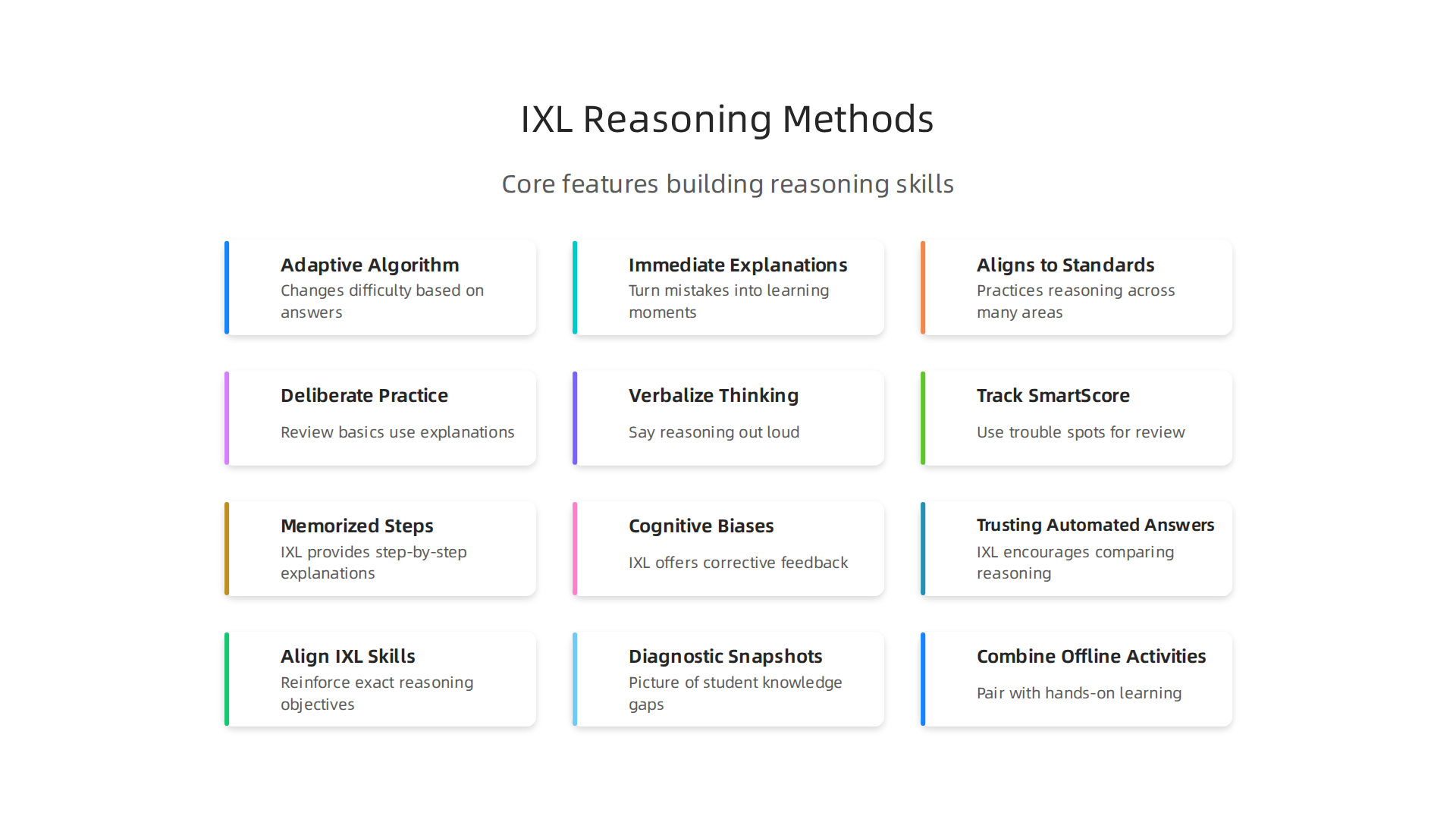
First, the adaptive algorithm changes difficulty based on your answers. When you get a question right, the next one gets a little harder. When you get one wrong, it adjusts to give you a problem at the right level. This keeps you in what educators call the "zone of proximal development." You are never bored by easy problems or crushed by ones too hard. You are always stretching your brain just enough. A study from SRI International found that IXL usage leads to higher achievement in math for grades 3 through 8, showing the adaptive loop really works.
Second, immediate step-by-step explanations turn mistakes into learning moments. This is the heart of building math reasoning. When you click the wrong answer, IXL does not just say "no." It shows you the error and walks you through the correct thinking. You see exactly where your logic went wrong and how to fix it. Over time, you start to spot your own reasoning gaps before you even finish the problem. That is the skill that transfers to any subject or real-world decision.
Third, IXL aligns every skill to educational standards. That means you practice reasoning across many areas. Logic and reasoning in word problems. Pattern recognition in algebra. Estimation in geometry. You are not just drilling one type of problem. You are building a broad foundation for developing math and logical reasoning abilities. When you move through the skill map, you see how each concept connects to the next. That connection is critical thinking in action.
If you want to see how these patterns apply beyond basic math, check out this guide on thinking critically with math range and spotting outliers. It shows how a simple math idea helps you make better sense of data.
The best part is that IXL does all of this without making you feel overwhelmed. Each session is short enough to keep your focus but deep enough to push your thinking. You finish knowing more than when you started. And that is the real goal.
Step‑by‑Step Strategies to Maximize Math Reasoning with IXL
Knowing how IXL builds reasoning skills is one thing. Actually using those features in a smart way is another. You can get much more out of the platform by following a few simple strategies. These three methods turn regular practice into real growth.
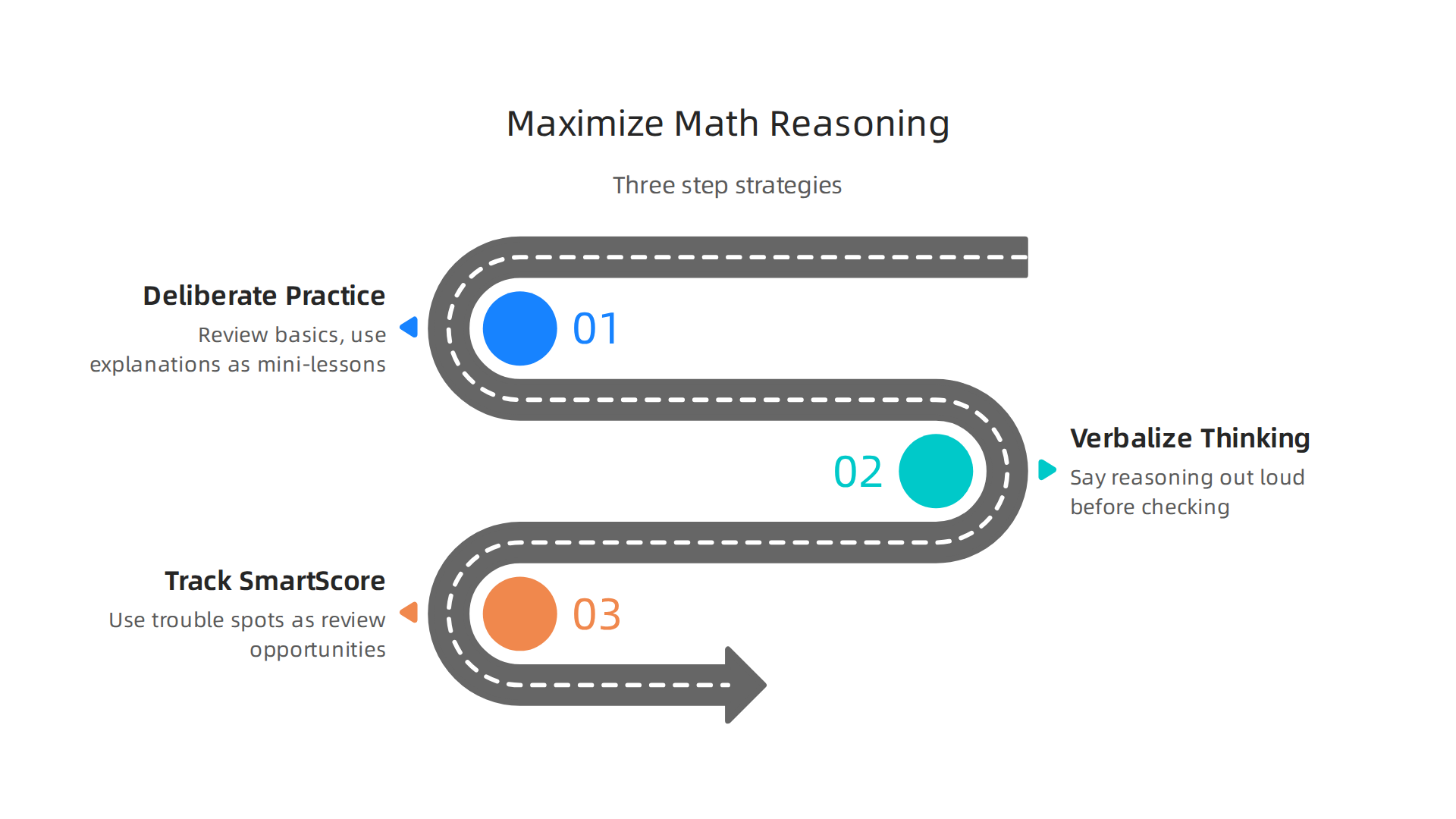
Strategy 1: Set a deliberate practice routine. Do not just jump into new topics cold. Before you start a new IXL skill, take five minutes to review the basics from earlier lessons. That warmup primes your brain for what is coming. Then when you hit a tough problem, use the step-by-step explanation as a mini-lesson. Read it carefully, not just to find the answer but to understand the thinking. This is one of the best ways to build metacognition, which research shows helps students think about their own learning. For more on this idea, read about how to guide students to self-regulated learning. The habit of previewing and reviewing turns a random session into focused practice.
Strategy 2: Encourage students to verbalize their thinking. Here is a trick that works well. After you solve a problem on IXL, say your reasoning out loud before you check the explanation. Walk through your steps just like you were teaching someone. Then compare what you said with IXL’s worked solution. Where did your logic match? Where did it go off track? This process trains your brain to catch its own mistakes. It also builds the habit of logical, step-by-step thinking that applies far beyond math. As one resource explains, critical thinking and mathematical reasoning go hand in hand. Verbalizing makes that connection stick.
Strategy 3: Track progress using the SmartScore and use trouble spots as review opportunities. IXL’s SmartScore is not just a number. It tells you exactly where you need more work. When you get stuck on a problem and your score drops, do not skip it. Pause and dig into the explanation. Mark that skill as a trouble spot and come back to it the next day. Revisiting weak areas turns them into strengths over time. This targeted approach is much more effective than running through skills you already know. If you want to go deeper on this, check out these ideas for developing math reasoning skills with IXL math lessons.
Building these three habits will help you get the most out of every session.

You move from just completing problems to truly thinking like a mathematician. And as you grow more confident in your own reasoning, you start to trust your own judgment. As you practice these strategies, remember that critical thinking starts with inner authority. Protect Your Judgment by staying intentional about how you approach each problem and each explanation. That is where real growth happens.
Common Pitfalls in Math Reasoning (and How IXL Helps Overcome Them)
Many students fall into traps that slow down their math growth. These pitfalls are common, but the good news is that IXL math is built to help you avoid them. Let’s look at three big ones and how IXL steps in.
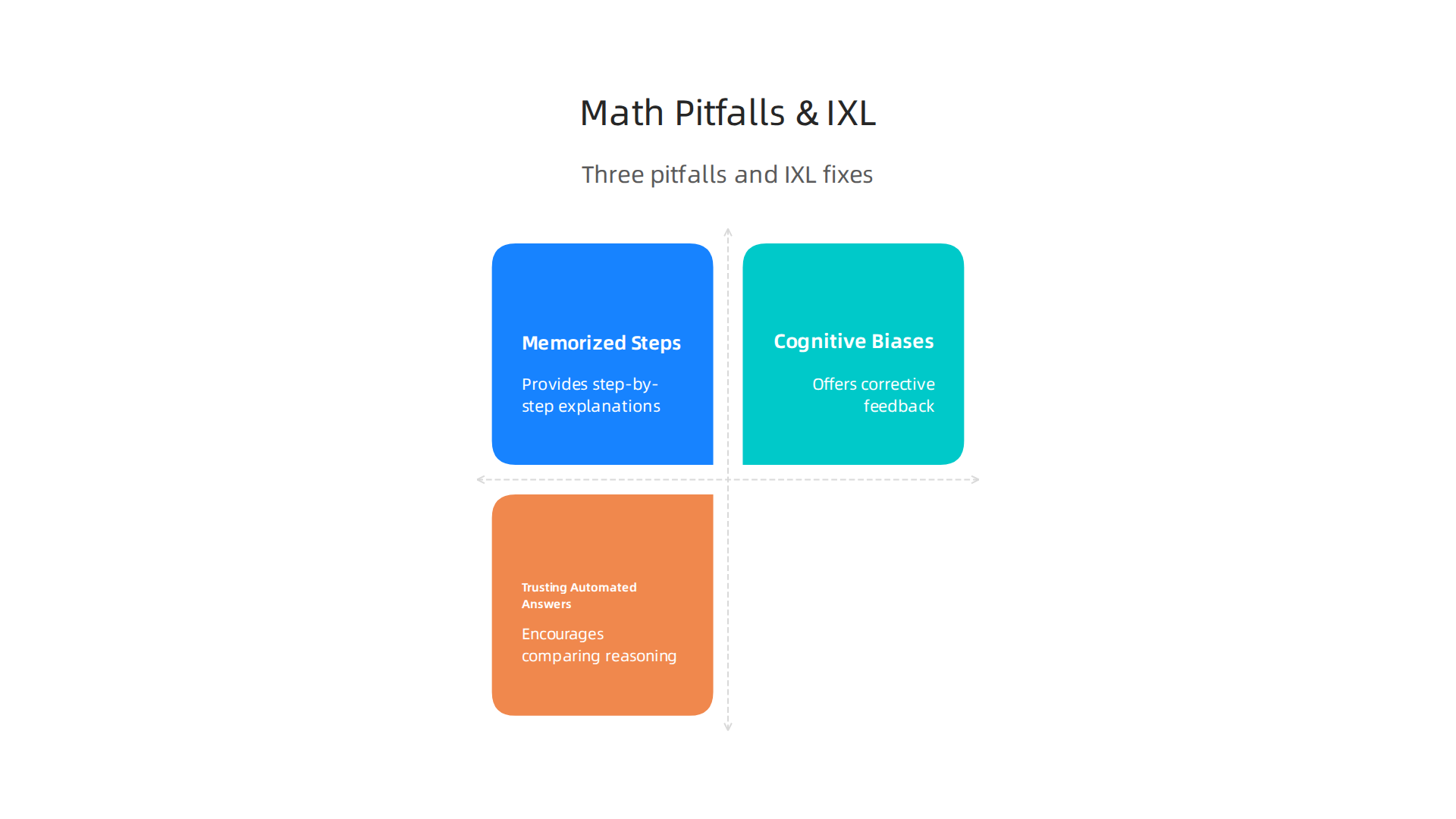
Pitfall 1: Relying too much on memorized steps without real understanding. When you just memorize a formula or a procedure, you can solve problems that look just like the example. But as soon as the problem changes even a little, you get stuck. That is fragile knowledge, not real reasoning. IXL math fights this by giving you step-by-step explanations for every problem you miss. Instead of just telling you the right answer, it shows you the thinking behind it. Research on the effect of immediate feedback on math achievement shows that students who get immediate explanatory feedback build deeper understanding than those who just get a final score. That is exactly what IXL does. It turns every mistake into a learning moment.
Pitfall 2: Letting cognitive biases steer your thinking. Biases like confirmation bias (only looking for evidence that supports your first guess) and anchoring (sticking with your first number even when later steps show it is wrong) can mess up your problem solving. Many students fall into these traps without noticing. IXL math offers corrective feedback that snaps you out of these patterns. When you get a problem wrong, the explanation points out exactly where your reasoning went off track. This trains your brain to catch its own biases. Studies on cognitive biases in self-explanation behaviors during math learning show that pseudo-confidence is a real problem. IXL’s immediate feedback helps you see the gap between what you thought you knew and what you actually understand.
Pitfall 3: Trusting automated answers without checking them yourself. In a world where tools like calculators and online solvers are everywhere, it is easy to just accept a number without verifying it. This "drift" can make you lazy about checking your own logic. IXL math teaches you to be a critical thinker. Every time you solve a problem, you can compare your reasoning to IXL’s official solution. That habit builds the skill of evaluating your own thinking. To go deeper on this, check out how to develop math reasoning skills with IXL math lessons and strategies.
While programs like Reflex Math and Big Ideas Math are useful, IXL math is especially strong at catching these three pitfalls. It gives you the feedback, the explanations, and the practice you need to build real logical reasoning abilities. And that is what separates a good math student from a great one.
Integrating IXL Math Into Your Curriculum or Homeschool Routine
Now that you know how IXL helps students sidestep common reasoning pitfalls, the next step is figuring out how to weave IXL math into your classroom or homeschool schedule. The tool is powerful on its own, but it works best when you use it with intention. Here are three practical ways to make that happen.
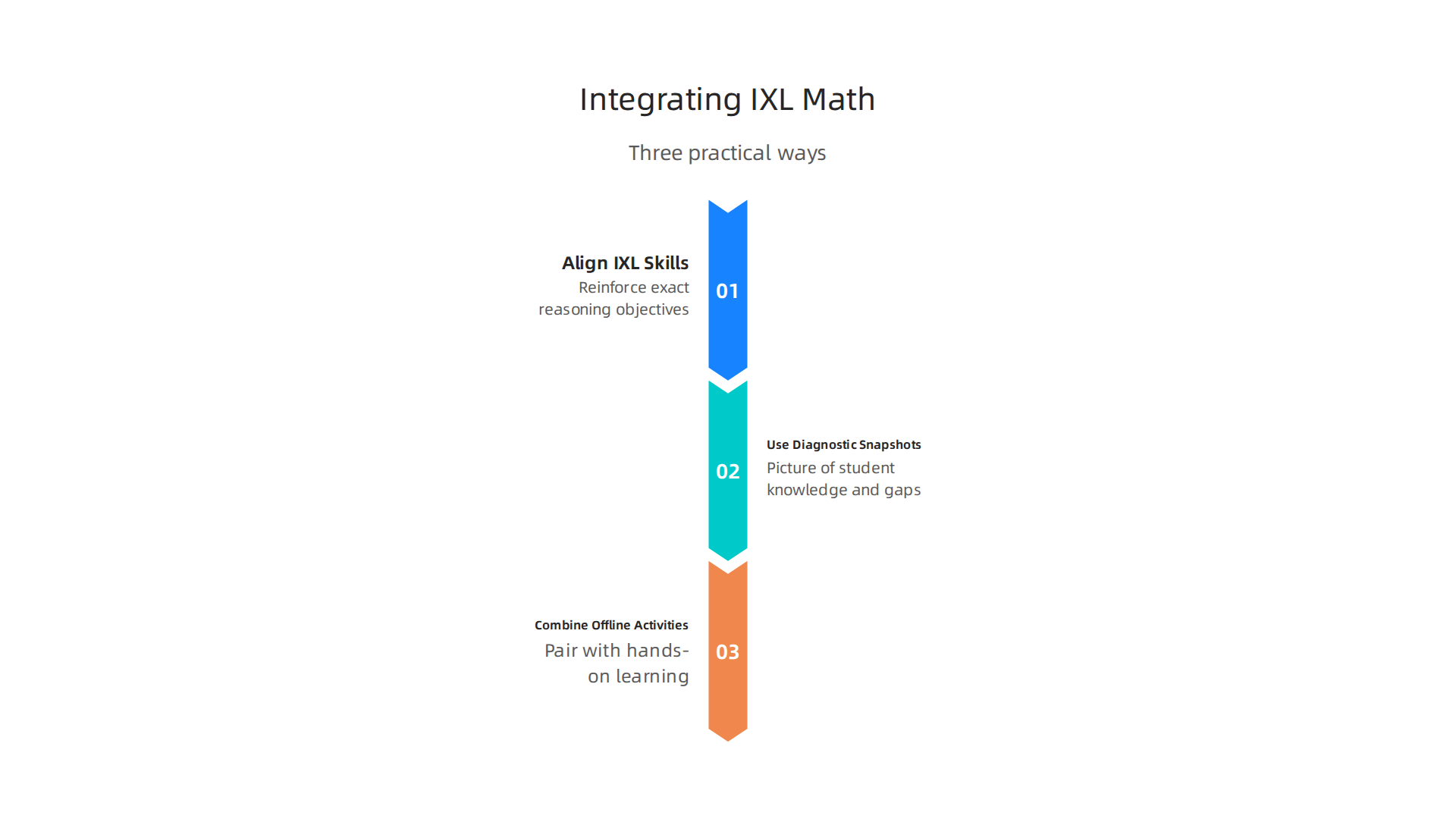
First, align IXL skills directly with your existing lesson plans. IXL offers skill plans that match popular textbooks, state standards, and even specific units you might already be teaching. Instead of adding extra work, you can assign IXL skills that reinforce the exact reasoning objective you covered that day. For example, if you just taught fraction comparison, assign the corresponding IXL skill for practice. Research on IXL Math meeting ESSA Tier 1 requirements shows that consistent, targeted use leads to higher achievement for students in grades 3 through 5. That kind of proof gives you confidence that your time is well spent.
Second, use IXL’s diagnostic snapshots at the start of each unit. The IXL diagnostic gives you a clear picture of what each student already knows and where they have gaps. You can run a quick snapshot before you introduce a new topic. This saves you from reteaching what students already understand and helps you focus on the reasoning skills they actually need. It is like having a map before you start a trip. You know exactly where to go.
Third, combine IXL with offline activities that build deeper thinking. Even the best online tool is stronger when paired with hands-on learning. After students finish an IXL session, have them write a math journal entry explaining how they solved a problem. Or get them into small groups to discuss different solution strategies. You can also pull out physical manipulatives like blocks or fraction tiles to make abstract ideas concrete. This blend of digital practice and real-world reasoning helps students build self-regulation skills. For more ideas on building a complete homeschool approach, check out this guide on how to choose a critical thinking homeschool curriculum that builds independent thinkers.
When you integrate IXL math into your routine this way, you are not just drilling problems. You are building a learning environment where logical reasoning grows naturally. The digital tool handles the practice and feedback, and you provide the context, discussion, and connection to the real world.

That combination is hard to beat.
Conclusion: Building Lifelong Math Reasoning with IXL and Critical Thinking Habits
Mastering math reasoning is not a one-time event. It is an ongoing process that gets stronger every time you practice. IXL math accelerates that process by giving you adaptive, feedback-rich practice that responds to exactly what you need. But the real magic happens when you pair IXL with habits that build critical thinking.
Here is the thing. Critical thinking and math reasoning reinforce each other. When you use IXL to practice a skill, you are not just getting the right answer. You are training your brain to spot patterns, question assumptions, and try new approaches. Those are the same skills you need to evaluate news, solve work problems, and make good decisions. Research from the Education Endowment Foundation shows that teaching students metacognition and self-regulation helps them think about their own learning and take control of it. IXL already supports this by showing you exactly where you struggled and how to improve. That is the perfect setup for building lifelong reasoning habits.
So what is your next step? Set a 30-day IXL challenge focused entirely on reasoning skills. Pick one strand like fractions or equations and work on it every day. Use the progress dashboard to track your growth. Each time you see a skill go from "Needs Improvement" to "Mastered," you are building confidence that transfers to every subject. And as you build those skills, keep asking yourself why a method works. That reflective habit is what turns a good math student into a strong thinker. For more ways to develop math reasoning specifically, check out this guide on how to develop math reasoning skills with IXL math lessons and strategies.
At the end of the day, strong math reasoning is about learning how to think clearly. IXL gives you the tools. Critical thinking gives you the mindset. Together, they help you face any problem with confidence. And that starts with trusting your own judgment. If you want to sharpen that inner authority even further, protect your judgment by staying grounded in clear, logical thinking. That is a skill worth building every single day.
Summary
This article explains how IXL Math can build true mathematical reasoning rather than just rote speed, showing why reasoning matters for critical thinking and lifelong judgment. It describes IXL’s adaptive algorithm, immediate step-by-step explanations, and standards alignment as the engine that keeps students in the right challenge zone. The guide offers concrete strategies—deliberate practice routines, verbalizing thinking, and using SmartScore to target weak areas—to turn short online sessions into durable understanding. It also outlines common reasoning pitfalls (memorization, cognitive bias, blind trust in tools) and how IXL’s feedback helps correct them. Practical tips show teachers and parents how to align IXL with lesson plans, use diagnostic snapshots, and combine digital practice with offline activities. Following the recommendations, readers will be able to design intentional IXL sessions that strengthen problem solving, metacognition, and critical thinking.